For most of us, the honest answer is never. Phones, laptops, servers — they all follow the same quiet arc. You unbox them feeling like you’ve got the best thing money can buy, and within a year or two, you’re eyeing the newer model and wondering if it’s time to upgrade already. That gap between “how long we own something” and “how long it actually feels current” has been widening for years, and it’s created a real problem for anyone trying to run a business without wasting money.
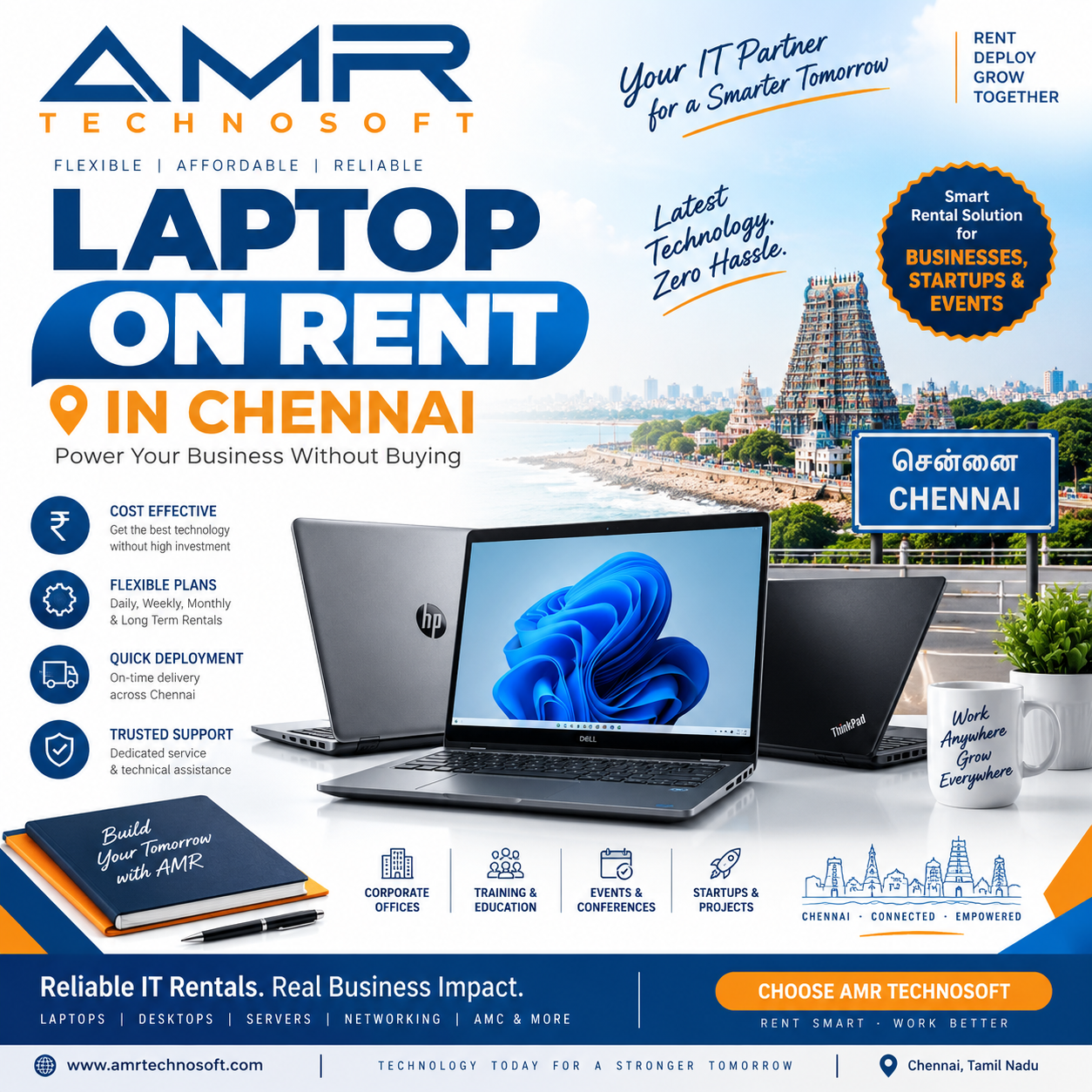
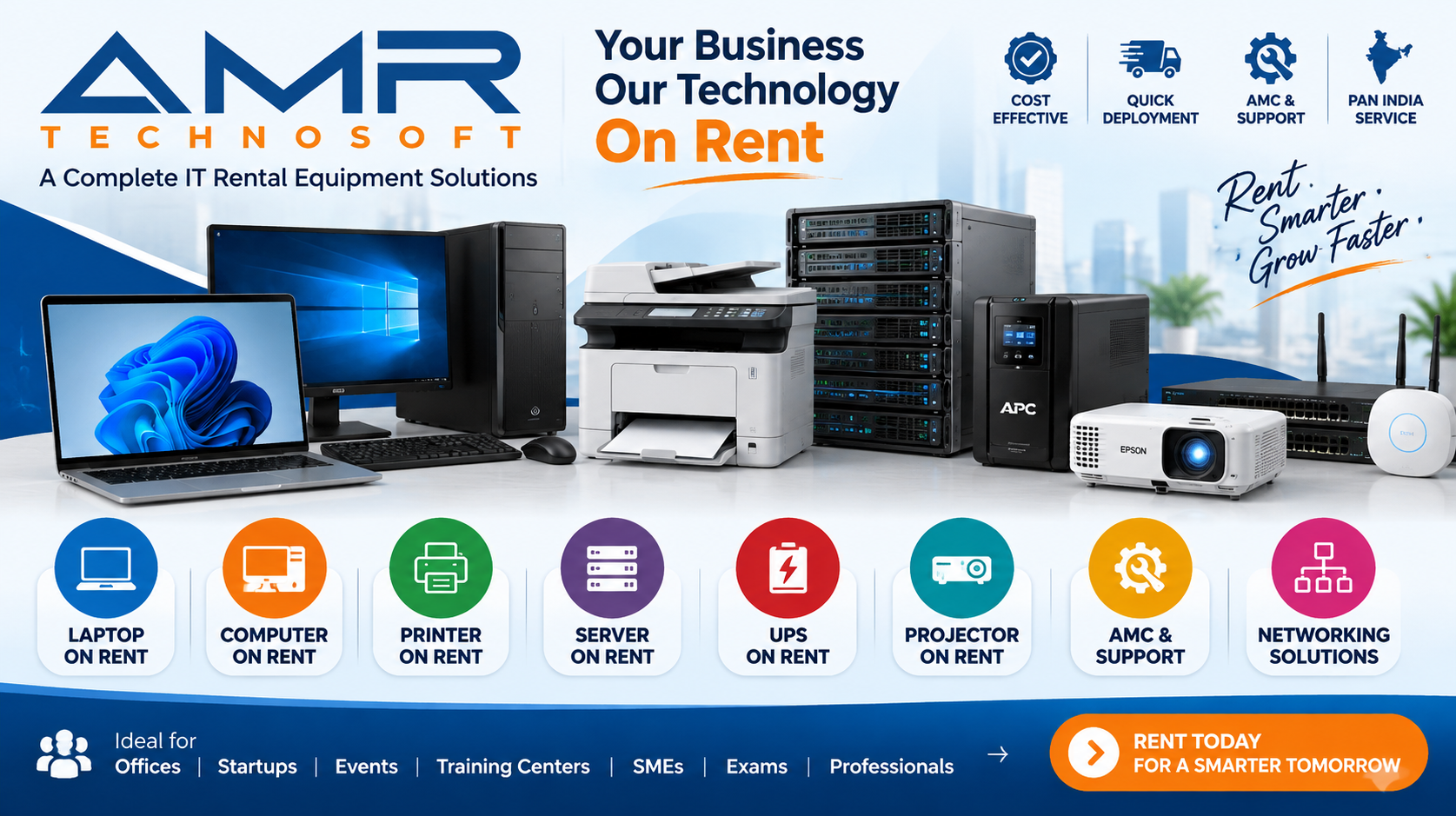
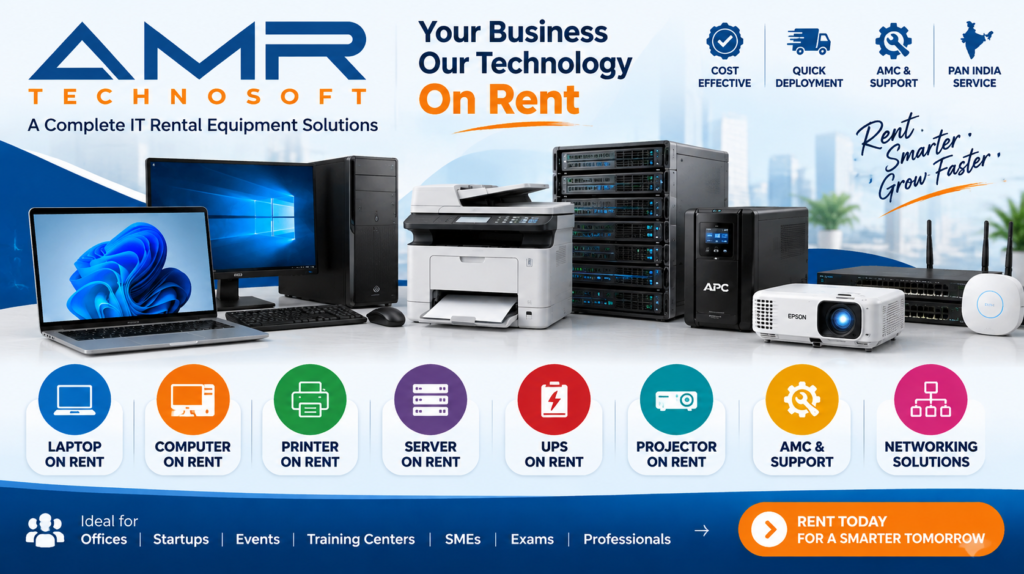
AMR Technosoft built its rental business around that exact gap. Instead of asking customers to buy hardware and live with whatever they chose for the next three to five years, it lets them rent laptops, desktops, servers, networking gear, and other equipment on terms that actually match how they’re going to use it. Need something for a weekend? Fine. Need it for eighteen months, then want to swap it for something faster? Also fine. That’s the whole pitch, really: top-tier technology, without getting locked into anything.
This piece walks through why that model has become so relevant, who actually benefits from it, and how it plays out in practice — from the financial mechanics to the day-to-day experience of renting rather than owning.
Buying Technology Used to Make Sense. It Doesn’t Anymore — Not the Way It Once Did.
There was a stretch of time when purchasing hardware outright was simply the obvious move, no real debate needed. Computers didn’t change that fast. A desktop bought in the late ’90s could still pull its weight years later. Businesses would plan a hardware refresh every few years, buy in bulk, and not think about it again until the next cycle rolled around.
That world is gone, and it’s not coming back.
Chips get faster every year, not every five years. Storage jumped from spinning disks to solid-state drives within a single refresh cycle for a lot of companies. GPUs and AI-accelerated hardware went from “nice to have” to “the whole point” almost overnight in some industries. And on top of all that, the way people work has changed — remote teams, contract staffing, project-based hiring — so the “right” amount of hardware for a company can shift every quarter, not every few years.
Put simply: buying hardware now means betting that your needs won’t change much for years, in an environment where almost nothing stays the same for years. A few things make that bet riskier than it used to be:
- The value drops the second you buy it. A laptop is worth noticeably less the day after you purchase it than the day before, and that decline doesn’t slow down.
- “Outdated” arrives faster than “old.” A three-year refresh cycle sounds reasonable until you realize the hardware might feel inadequate for demanding work well before that cycle is up.
- Your cash gets stuck. Every dollar tied up in hardware is a dollar that isn’t funding payroll, marketing, or just sitting in reserve for when you actually need it.
- Maintenance never shows up on the price tag. Repairs, spare parts, warranty headaches, eventual disposal — none of that is in the sticker price, but all of it adds up.
- Scaling gets expensive and slow. Need to onboard twenty people next month? Either you already overbought (wasting money for months) or you’re scrambling to purchase fast (usually paying a premium and waiting on shipping).
Because of all this, a lot of companies have quietly changed the question they ask. It used to be “what should we buy?” Now it’s closer to “what do we need access to, and for how long?” That second question is really the whole idea behind flexible rental — and it’s the question AMR Technosoft is built to answer.
So What Actually Is a “Flexible” Rental Plan?
Strip away the marketing language and a flexible tech rental plan is pretty simple: you get access to hardware — laptops, servers, networking equipment, tablets, whatever you need — for a period that makes sense for you, and the terms can move as your situation changes instead of locking you into something rigid.
The flexibility shows up in a few specific ways worth calling out individually.
Duration isn’t one-size-fits-all. Old-school leases often forced multi-year commitments with brutal penalties if you needed out early. A flexible plan can run for a few days if you’re covering a weekend event, a few months for a project, or a year-plus if it’s an ongoing operational need — the term matches the actual use, not some standard contract length someone picked years ago.
Scale moves with you. If you need five laptops today and fifty by next quarter, a good rental relationship doesn’t force you to renegotiate from scratch every time your headcount changes.
Upgrades happen mid-stream. Say your design team suddenly needs serious GPU power for rendering work they didn’t anticipate. A flexible plan lets you swap in better hardware rather than forcing you to buy something new on top of what you already have.
There’s an actual way out. When the project ends or the contract wraps up, you hand the equipment back. You’re not stuck owning something you no longer need, and you’re not stuck depreciating on your own books.
It’s worth separating this from traditional leasing, because people often lump the two together. A traditional lease usually locks you into 24 to 60 months, fixed payments, and steep penalties if anything changes mid-contract. At the end, you might get an option to buy at residual value or renew — but the whole thing is set in stone from day one. Flexible rental flips that: shorter terms if you want them, the ability to change your equipment mix as things evolve, and room to scale in either direction without getting punished for it.
Why “No Commitment” Actually Matters Right Now
It would be easy to write “without the commitment” off as a slogan. It isn’t. It’s addressing something real.
Uncertainty rewards flexibility. Interest rates move, demand shifts, plans change faster than anyone expects. Sinking capital into hardware — or signing a five-year lease — is a bet that things will stay roughly the same for a long time. Renting keeps your options open instead of betting on stability you can’t guarantee.
Work itself has become less predictable. Hybrid schedules, remote hires, contractors who join for six months and leave — staffing simply doesn’t hold still the way it used to. A rigid, ownership-based approach to equipment can’t keep up with that kind of movement. Rental was basically built for it.
Hardware gets outdated faster than it used to. For anyone doing serious compute work — development, video editing, rendering, data science — the useful window before hardware starts to feel limiting has gotten shorter. Owning that hardware for years means accepting that a chunk of its life will be spent as dead weight rather than an asset.
Every commitment is a risk you’re carrying alone. Buy or lease long-term, and you’re betting your needs won’t change much. If they do, you’re the one holding the consequences. Rental shifts a lot of that risk over to the provider, who’s set up to manage it across a whole fleet of equipment rather than one company’s guess about the future.
What AMR Technosoft Actually Does Differently
The idea behind AMR Technosoft is straightforward: technology should support what you’re trying to do, not box you in. In practice, that shows up in a handful of concrete ways.
The equipment is genuinely current. A rental plan is only as good as what’s actually being rented out, and AMR Technosoft keeps its inventory made up of recent, well-maintained hardware — not aging leftovers nobody else wanted. You get the same caliber of laptops, workstations, and servers you’d get buying outright, minus the upfront cost and the long-term risk.
Plans are built around how people actually use equipment, not forced into one rigid format — short rentals for events and pilot projects, medium-length rentals for project teams and seasonal scaling, longer arrangements for companies that want current technology without ever owning it.
Maintenance is somebody else’s problem — specifically, theirs. Support, servicing, and replacement in case something breaks are baked into the plan, so the burden isn’t sitting on your internal team.
Pricing is upfront, not a surprise waiting to happen. Nothing kills the value of “flexible, no commitment” faster than hidden fees. Costs are structured so you can budget with confidence.
There’s a real way to leave. When your project wraps, your team shrinks, or you just want better hardware, you can return, swap, or adjust — without being stuck holding something you don’t need anymore or fighting your way out of a rigid contract.
The Actual Case for Renting Over Buying
Let’s get into the specific reasons this tends to work out better than ownership, because “flexible” only matters if it translates into real advantages.
It keeps your cash where you can use it. Buying hardware outright is a big upfront hit — capital that could otherwise go toward hiring, marketing, or just having a cushion for when things get tight. Renting turns that lump sum into a smaller, predictable expense spread over time. That’s not just a bookkeeping detail — it means more room to move when an opportunity (or a rough patch) shows up.
You’re not stuck with old hardware because the budget didn’t allow for new hardware. Rental terms are structured so refreshing your equipment is a normal, built-in part of the relationship rather than a rare event that requires a big capital ask. For anyone doing demanding work — rendering, development, data science — that access to current-generation processors and GPUs matters a lot more than it sounds.
You can scale without wasting money. Business needs move around constantly — a six-month product push that doubles engineering headcount, a seasonal spike that needs extra staff, an event that needs a hundred tablets for one weekend and none the month after. Rental lets your equipment footprint move with those swings instead of sitting there unused during the quiet months.
Something breaks, it’s not your headache. Owning hardware means owning every hardware problem: troubleshooting, sourcing parts, managing warranties, disposing of dead equipment responsibly. Rental shifts most of that onto the provider — if something fails, it typically gets repaired or swapped with minimal disruption on your end.
Costs stop being unpredictable. Ownership comes with surprise expenses — a sudden repair, an emergency replacement, a chunk of equipment all hitting end-of-life at once. Rental turns that into a steady number you can actually plan around, which matters a lot more than it sounds when you’re running lean.
There’s a real environmental upside, too. A lot of the tech industry’s environmental footprint comes from devices getting replaced long before they’re actually worn out. When equipment moves through a rental cycle instead of getting tossed the moment one company decides to upgrade, providers have an incentive to refurbish and redeploy it — getting more real use out of every device before it’s finally retired and recycled.
You’re not the one holding the obsolescence risk. If hardware standards jump faster than expected, or your needs shift in a way you didn’t anticipate, that’s a problem the provider is built to absorb across a large, varied fleet — not something you have to eat alone.
Rental payments are often simpler on the books, frequently treated as an operating expense rather than a capital one — though the details vary by situation, so it’s worth checking with an accountant rather than taking that as universal advice.
You get moving faster. Buying in bulk usually means budget approvals, vendor back-and-forth, and shipping delays. A rental provider set up for quick turnaround can often get equipment to you — and your team working — much sooner.
You can access equipment you’d never justify buying for occasional use. A high-end rendering workstation, specialized networking gear, premium AV equipment for one big event — hard to rationalize as a purchase, easy to rationalize as a rental.
Who This Actually Makes the Most Sense For
Startups. Capital efficiency can be the difference between making it to the next funding round and not. Every dollar spent on hardware is a dollar not spent on product or growth. Renting lets a young company equip its team properly without draining runway, and scale that footprint up or down as things change — which, for a startup, they always do.
Small and mid-sized businesses. These companies need professional-grade equipment to compete but often don’t have the cash cushion larger companies do. Rental levels that playing field.
Larger enterprises. Even well-funded companies use rental for project work, temporary staffing surges, pilot programs, and setting up satellite offices — situations where buying doesn’t make sense even if the money’s there.
Remote and hybrid teams. Getting standardized, reliable equipment to a team scattered across different cities (or countries) is a logistical mess if you’re managing owned assets. Rental providers can ship directly to new hires and handle returns cleanly when someone leaves.
Event and production companies. Conferences, trade shows, video shoots — all of them need a burst of equipment for a short window. Buying gear that gets used twice a year makes little sense. This is arguably the most natural fit for rental of any use case on this list.
Schools and training programs. Providing laptops or tablets for a semester or a course, then having that need disappear or shift to a new group of students — rental avoids the capital burden of buying devices that might sit idle between programs.
Freelancers and independent contractors. Especially in fields with occasional high-performance needs — editors, 3D artists, developers on short contracts — rental gives access to serious hardware for the length of a specific job, without owning equipment that sits unused between gigs.
Anyone testing something new. A new tech stack, a proof-of-concept, a different way of working — rental lets you try it out at low risk before committing real capital to a direction you haven’t validated yet.
What You Can Actually Rent
The range is broader than people usually expect:
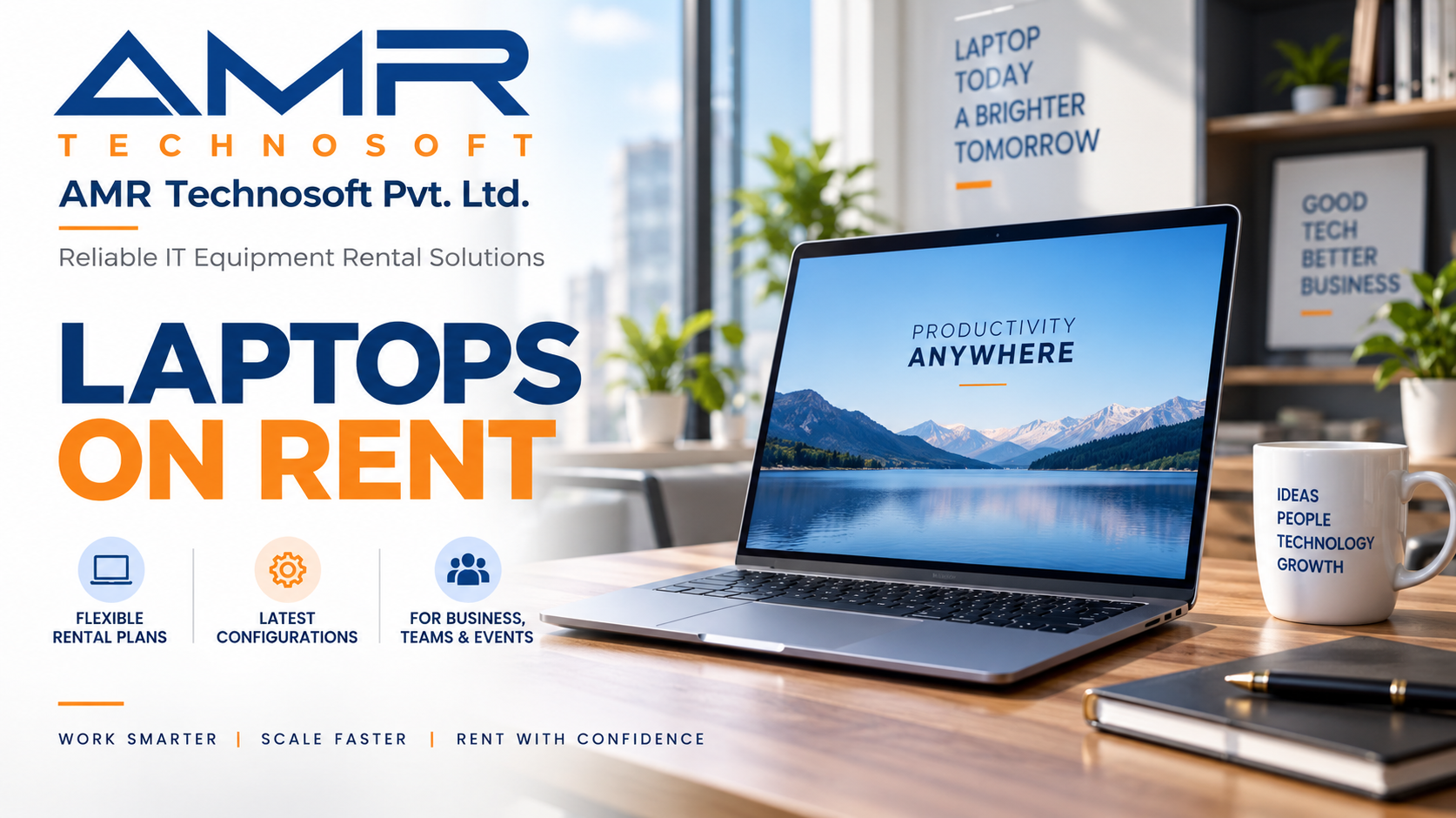
- Laptops and notebooks — from lightweight machines for everyday work to serious workstation-grade laptops with dedicated graphics for creative or technical jobs.
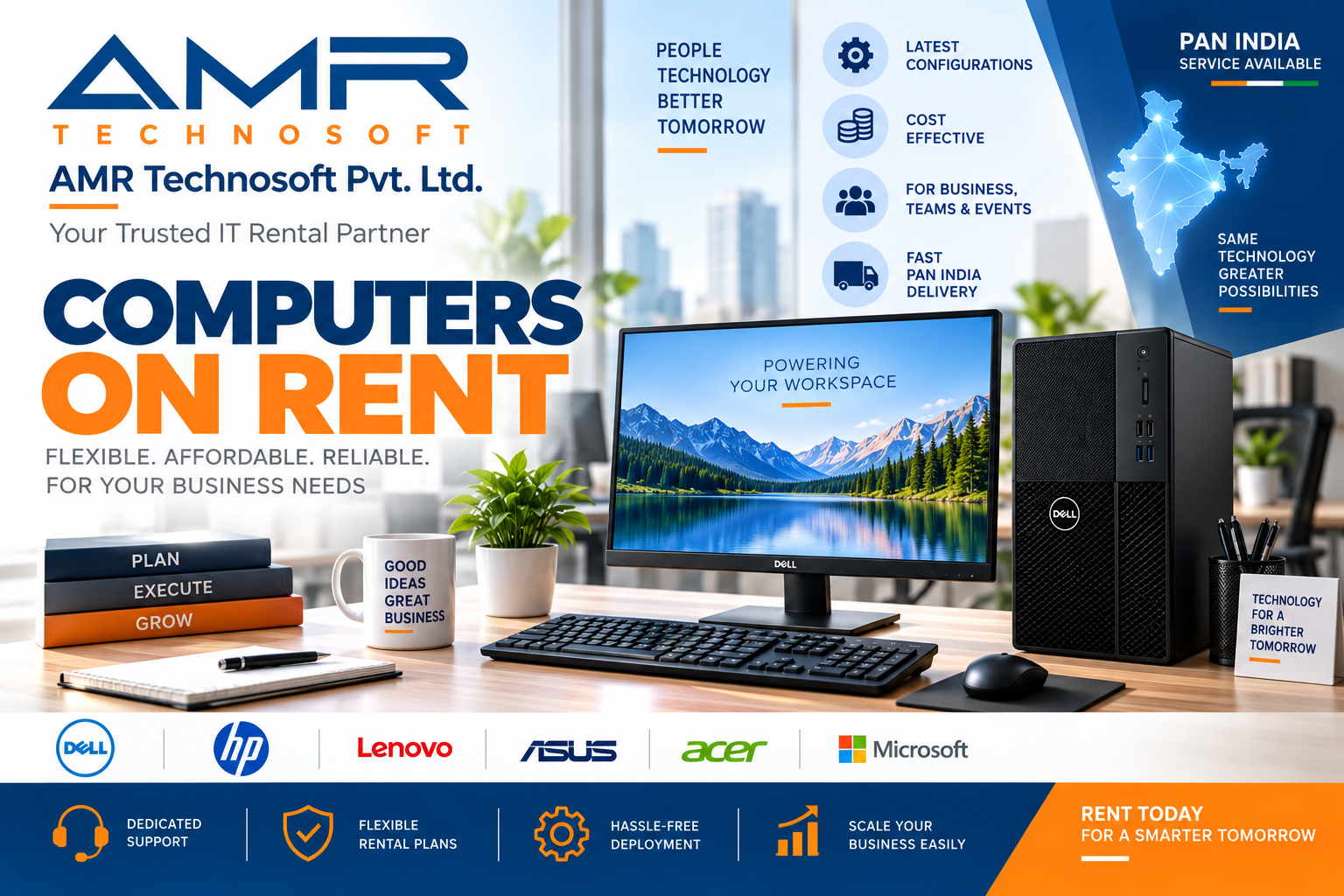
- Desktop workstations — for roles that need real processing power but not portability: development, engineering simulation, financial modeling, rendering.
- Servers and data center hardware — enterprise-grade infrastructure without the capital outlay, useful for testing new setups or handling seasonal traffic spikes.
- Networking equipment — routers, switches, firewalls, wireless access points, for a new office, a temporary event, or a test environment.
- AV equipment — projectors, screens, mics, speakers, video conferencing gear for events and hybrid meeting spaces.
- Tablets and mobile devices — for point-of-sale, event check-ins, field data collection, training programs.
- Printers and imaging equipment — reliable, temporary printing support for offices or events, without owning and maintaining a fleet.
How It Actually Works, Step by Step
Figure out what you need. Type of equipment, how much of it, what specs, and roughly how long. Could be one laptop for a new hire, fifty tablets for a weekend, or a fleet of workstations for a six-month project.
Pick a plan that fits your timeline. Short-term for an event, medium-term for a project, longer for ongoing needs.
Equipment gets provisioned. Configured, tested, ready to go the moment it arrives — software installed, security set up, tagged if it’s a larger deployment.
It gets delivered. To one location or several, on a schedule that works for you, especially important for distributed teams.
Support runs through the whole term. Technical issues, hardware failures, configuration changes — handled without your team having to absorb the disruption.
You can adjust mid-term. Need more units, want an upgrade, need to scale back — flexible plans are built to handle that without forcing a new contract from scratch.
And at the end, you actually have options. Return it, extend, upgrade, or in some cases move toward a purchase if ownership turns out to be the right call after all. That flexibility at the finish line is really the whole point of “no commitment.”
The Real Math: Renting vs. Buying
The sticker price of a purchase is never the whole story. The real cost of owning hardware includes the purchase itself, financing if you didn’t pay cash, ongoing repairs and part replacements, the internal time spent managing and troubleshooting it, the opportunity cost of capital that’s now stuck in a depreciating box, and eventually the cost (and increasingly, the regulatory requirements) of disposing of it responsibly. None of that shows up on the price tag when you buy.
Rental bundles most of that into one predictable number. Maintenance and support are usually included. There’s no disposal to manage on your end. No financing costs, since there’s no loan involved. And the obsolescence risk is largely someone else’s problem, since equipment can typically be refreshed at (or even before) the end of the term.
Renting tends to make the clearest financial sense when your usage duration is uncertain, when preserving cash matters more than owning an asset, when your needs are likely to change, when the equipment category depreciates or becomes outdated quickly, or when maintaining it yourself would require dedicated staff you don’t have.
To be fair, ownership can still be the better call in some situations — very long-term, very stable, highly predictable usage where there’s a real reason to build equity in the asset itself. The point isn’t that renting always wins. It’s that the decision deserves an actual look at your usage pattern, rather than defaulting to “buy” out of habit.
A Few Myths Worth Clearing Up
“Rented equipment is old or beat-up.” That reputation is a holdover from a very different era of rental services. A provider like AMR Technosoft has every reason to keep its fleet current — outdated hardware would undercut the entire “top-tier technology” pitch.
“Renting always costs more in the long run.” Sometimes, in pure sticker-price terms over an extremely long, trouble-free ownership period, buying can look cheaper. But that comparison quietly ignores maintenance, obsolescence risk, and the opportunity cost of tied-up cash. Once you account for those, renting often comes out ahead for anything short of very long, very stable use.
“Rental contracts are just leases with a different name.” Traditional leases and flexible rental aren’t the same thing. Leases lock you in for years with real penalties for changing your mind. Flexible rental is specifically designed to avoid exactly that.
“If your business keeps growing, renting just means paying forever.” That’s actually the scenario where rental shines — continuous, smooth scaling instead of repeatedly buying new gear and trying to offload the old stuff every time growth outpaces what you already own.
“You lose control of the equipment when you rent.” Not really — you configure it, use it, run it exactly like you would if you owned it. The difference only shows up at the end of the term, where you get options instead of being stuck.
Picking the Right Plan for You
A few questions worth answering before you commit to anything:
How long do you actually need this for — days, months, or something ongoing? How much equipment, and how likely is that number to shift? What performance level does the work actually require — a modest laptop is fine for some roles, overkill or inadequate for others. Do you have internal IT support, or do you need the provider to carry more of that weight? How much uncertainty is there about your timeline, and does that call for a plan with more flexibility built in? And what’s actually included in the price — maintenance, delivery, setup — versus what looks cheap on paper but adds costs later?
A Few Ways This Plays Out in Practice
A startup lands new funding and plans to double its engineering team over two quarters. Instead of a big upfront hardware purchase that eats into runway, it rents laptops as people are hired, scaling the agreement gradually. When the next funding round takes longer than expected, it can simply pause additional rentals instead of sitting on equipment it can’t use.
A retailer sees a predictable holiday spike and needs extra point-of-sale tablets and networking gear for temporary pop-up locations. Buying equipment that sits idle eleven months a year makes no sense, so it rents exactly what’s needed for the season and hands it back afterward.
An events company running a three-day conference needs 200 tablets, networking equipment, and AV gear across multiple rooms. A short-term rental covers the exact duration of the event, no storage headache, no massive one-time purchase for something used a handful of times a year.
A remote-first company needs to equip new hires across several countries with standardized laptops. Rather than managing an international purchasing and shipping nightmare, it lets the rental provider handle provisioning and delivery straight to each new hire.
An enterprise wants to pilot a data analytics initiative but isn’t sure yet whether it’ll become permanent. Rather than committing to a big server purchase before knowing if the approach even works, it rents the infrastructure for a six-month pilot, with room to extend or scale depending on what it learns.
Common Questions
What can I actually rent? Laptops, desktop workstations, servers, networking equipment, tablets, AV gear, printers — most of what a business needs to run, day to day or for a single event.
How long can I rent for? However long makes sense — days for an event, a few months for a project, a year or more for ongoing needs.
Can I upgrade partway through? Yes — that’s part of what makes it flexible. If your needs change, your equipment can change with them.
What if something breaks? Maintenance and support are typically built into the agreement, so a hardware failure gets handled through repair or replacement rather than becoming your problem to solve.
Is renting actually cheaper than buying? It depends on your situation, but once you factor in maintenance, depreciation, obsolescence risk, and the opportunity cost of tied-up capital, renting often works out better for anyone with fluctuating needs or a shorter time horizon. For very long, very stable needs, buying can sometimes edge it out on raw cost — worth actually running the numbers for your specific case.
Can I rent for just one event? Yes — short-term rentals exist specifically for this: conferences, trade shows, one-off productions.
Do I have to buy the equipment eventually? No. You can return it, extend, or upgrade — there’s no built-in obligation to purchase at the end.
Is this only useful for small companies? Not at all. Larger companies use it constantly for project work, temporary staffing, pilots, and satellite offices — situations where buying doesn’t make sense regardless of budget.
How fast can equipment actually arrive? Faster than a typical purchase process in most cases, since there’s no financing approval or long procurement chain to work through — though exact timelines depend on what you need and how much of it.
What happens to data on returned equipment? Reputable providers follow proper data-wiping protocols before equipment goes back into rotation, in line with standard data protection practices.
Where This Leaves Things
The old model — buy it, own it, live with your choice until the next budget cycle allows a refresh — made sense in a slower, steadier era. That era’s over. What businesses need now is the ability to access the right technology, at the right scale, for exactly as long as they actually need it, without carrying the financial and operational weight of owning it outright.
That’s the actual argument for AMR Technosoft’s approach. Letting people access solid, current technology without locking them into anything solves a problem that a lot of companies have been quietly struggling with for years — the tension between needing good equipment and not wanting to be stuck with it.
Whether that’s a startup trying to protect its runway, a company piloting something new, an events team covering a single weekend, or a remote business trying to equip people scattered across the map — flexible rental offers a more adaptable way to get the technology that’s actually needed, for exactly as long as it’s needed, and not a day longer.