Key Takeaways
Laptop rentals offer strategic advantages beyond simple cost savings, transforming how modern businesses manage technology in the remote work era.
• Preserve capital for growth: Rental models convert large upfront investments into manageable monthly payments, improving cash flow by 25-30% and reducing IT infrastructure costs by 30-45%.
• Deploy faster with zero-touch setup: Pre-configured devices arrive within days, achieving 25% faster deployment times and reducing help desk calls by 80% during employee onboarding.
• Transfer hardware risks to providers: Rental agreements eliminate maintenance overhead by 60%, offering 24/7 support, overnight replacements, and automatic compliance with security standards.
• Scale instantly for distributed teams: Direct shipping to 140+ countries enables rapid workforce expansion, while flexible agreements allow adding or returning devices based on real-time business needs.
• Shift from CAPEX to OPEX: Rental payments qualify as fully deductible operational expenses, providing immediate tax relief and eliminating hidden ownership costs that add 30-40% to purchase prices.
The rental model isn’t just about avoiding large purchases—it’s about building an agile, scalable IT infrastructure that adapts to changing workforce dynamics while freeing capital for revenue-generating activities.
The average business laptop purchased three years ago looks very different from what remote employees need today. More enterprises are moving toward flexible IT models where laptop rentals replace outright purchases. Speed has become more important than ownership, and for good reason.
Laptop rentals cater to this shift in work environment dynamics, offering professionals and organizations the ability to scale their hardware needs. Whether you’re searching for laptop rentals near me or evaluating long-term IT strategies, the benefits extend far beyond simple cost savings. In fact, rental models provide financial flexibility, operational agility, risk mitigation, and seamless support for distributed teams.
In this article, we’ll explore the hidden advantages that make laptop rentals a strategic choice for modern businesses navigating remote work challenges.
Why Laptop Rentals Are More Than Just Cost Savings
Financial Flexibility Beyond Upfront Costs
Buying laptops in bulk takes up a lot of capital that could be used elsewhere to expand your business. I see entrepreneurs typically choose to open their businesses by renting what they need instead of purchasing them, which has the immediate benefit of being able to keep working capital for other types of revenue-generating activities rather than having a large portion of it tied to depreciating equipment.
A hypothetical example is an IT company with 50 employees that has to invest ₹30 lakhs up front to buy laptops that cost ₹60,000 each. They could hire several experienced software developers with the money they would spend on the laptops, spend money on development and marketing, or even conduct research and development to create new products. When the company rents laptops at a monthly rate that varies from ₹1,299 to ₹3,000 depending on the type of laptop, that capital expenditure becomes a manageable monthly operating expense.
According to several studies, moving to a rental model can improve cash flow by about 25 to 30 percent. Many organizations have also reported a reduction in total IT infrastructure costs of 30 to 45 percent after transitioning from an ownership model to a rental model for their IT equipment. These types of improvements in finances represent a significant shift in the way organizations use their capital and other resources.
Operational Expense Benefits for Modern Businesses
The shift from AMR technosoft Fundamentally alters your financial statements. Purchased laptops depreciate at 40% annually under tax regulations. This means a ₹100,000 laptop loses ₹40,000 in value the first year, then continues declining.
Rental payments, on the other hand, qualify as fully deductible operational expenses in the same financial year. A business renting 10 laptops at ₹1,500 each pays ₹180,000 annually as a complete business deduction. Purchasing those same laptops for ₹1,000,000 only allows a ₹400,000 first-year depreciation deduction, with declining benefits afterward.
This operational expense treatment simplifies accounting procedures and provides immediate tax relief. The combined tax deductibility benefit can reduce effective costs by 20-30% depending on corporate tax rates.
Rental agreements also eliminate hidden ownership costs that add 30-40% to original purchase prices over three years. Annual maintenance contracts, software licensing fees, IT administrative overhead, repair bills, and disposal expenses disappear from your balance sheet.
Budget Predictability in Uncertain Times
Fixed monthly rental costs replace irregular maintenance expenses and unexpected replacement bills. Finance teams gain clearer profit and loss statements without depreciation schedules, asset tagging complexities, or disposal accounting.
Laptop rentals also improve financial ratios that affect creditworthiness. Reduced asset bases enhance Return on Assets, while improved cash positions strengthen current ratios and debt-to-equity metrics. For growth-stage companies where investors scrutinize financial health, these improvements translate to better credit terms and lower borrowing costs.
Predictable expenses matter most when revenue fluctuates. Rental models provide stability that purchasing cannot match.
Speed and Agility in a Fast-Moving Business Environment
Rapid Deployment for New Projects and Teams
When rental companies supply pre-set devices promptly, the time required to get equipment setup is significantly reduced versus using traditional procurement methods, where suppliers have several weeks of negotiations, several levels of approvals, and checking for supplies on hand before GA equipment is available.
The popularity and efficiency of zero-touch deployment has grown quickly. In a 2025 survey, IT executives were asked about the use of zero touch solutions to reduce set-up times; 68% said they had an interest. In addition, 43% of companies reported their use of endpoint management tools to onboard new employees. Tools like Windows Autopilot and the like enable the average deployment to be approximately 25% faster than the traditional deployment method. This has decreased the time necessary to deploy equipment from approximately 30 minutes per employee to less than two minutes through the use of streamlined processes.
Eliminating Procurement Delays
Purchasing hardware internally consumes resources across sourcing, configuration, delivery, and maintenance. Rental providers handle these stages, allowing teams to start operations without procurement bottlenecks. Pre-configured laptops arrive ready for immediate use, removing the setup burden from internal IT staff.
Scaling Up or Down Based on Real-Time Needs
Business requirements shift constantly. Rental models let organizations add devices instantly during expansion or return equipment after project completion. This flexibility proves valuable for seasonal demands, temporary teams, and training programs where purchasing would create unused inventory.
For instance, a startup expanding into three regions simultaneously can equip new hires in Singapore, Berlin, and San Francisco within one week. Developers receive higher-spec devices while general staff get standard configurations, all delivered directly to their locations.
Quick Onboarding for Remote Employees
Remote work adoption has changed device deployment fundamentally. Robert Half reports that 88% of U.S. employers now offer hybrid work arrangements, with 55% of job seekers ranking it as their top preference. Rental providers ship laptops directly to employee locations with necessary software pre-installed. Organizations using modern deployment methods report an 80% drop in help desk calls, streamlining onboarding while reducing IT workload.
Risk Transfer and Reduced IT Burden
Hardware Failure and Replacement Coverage
Owning hardware means absorbing failure risks that disrupt operations. Rental providers handle this differently. When a device malfunctions and remote repair isn’t possible, they send a replacement overnight, not a temporary loaner. Organizations experience a 60% reduction in IT maintenance overhead with rental models, freeing technical staff from troubleshooting hardware issues. Most providers offer 24/7 technical support, ensuring minimal downtime regardless of when problems occur.
Asset Tracking and Management Simplified
Tracking laptop locations, usage patterns, and lifecycle stages consumes IT resources. Rental providers use centralized dashboards that monitor inventory in real time, eliminating the need for internal tracking systems. According to IRS guidelines, laptops have an expected five-year useful life. Rental agreements remove the burden of managing these lifecycles internally. You receive visibility into your technology inventory without building tracking infrastructure or assigning staff to monitor device status across multiple locations.
Security Updates and Compliance Support
Pre-configured laptops arrive with necessary security protocols already installed. Rental companies deliver devices meeting industry-specific regulations, whether you operate in healthcare, finance, or other regulated sectors. This addresses compliance requirements for ISO, GDPR, and HIPAA standards. Additionally, secure data wiping occurs when employees depart or projects conclude, protecting sensitive information through professional-grade erasure processes. Enhanced security features like biometric authentication and advanced encryption come standard, reducing the configuration workload for IT teams.
Avoiding Technology Obsolescence Costs
Technology becomes outdated within two to three years. Rental services eliminate obsolescence risks by providing continuous access to current hardware configurations. Organizations achieve 25% faster deployment of new technology initiatives through rental models, maintaining competitive advantages without capital reinvestment cycles that purchasing demands.
Supporting Distributed Teams and Future Work Models
Direct Shipping to Remote Employee Locations
Distributed teams require immediate device access regardless of geography. Rental providers ship pre-configured laptops directly to employee addresses, eliminating centralized distribution points. This direct-to-employee model accelerates onboarding while reducing internal coordination overhead. Providers coordinate deliveries nationwide for corporate teams spread across multiple cities, handling logistics that would otherwise consume IT resources.
Seamless Device Recovery and Redeployment
Device returns follow structured processes with prepaid labels and pickup coordination. Rental services collect equipment from departing employees, inspect devices, securely wipe data, and store them in managed warehouses. Companies can redeploy stored devices to new hires in the same region or ship them to different locations, maximizing asset utilization without manual tracking.
Flexibility for Hybrid Work Arrangements
Hybrid models now define workplace structure, with 52% of roles operating in hybrid arrangements. Rental services support employees working both remotely and from offices, providing deployment flexibility as work locations shift. Organizations maintain consistent hardware standards across distributed and on-site teams.
Enabling Global Workforce Expansion
Rental providers ship internationally to over 140 countries, managing customs and tariffs. This capability supports rapid geographic expansion without establishing local procurement infrastructure.
Finding Reliable Laptop Rentals Near Me
Searching for laptop rentals near me connects businesses with local providers offering flexible plans. Regional services provide same-day delivery in major cities, ensuring quick access when immediate deployment becomes necessary.
Conclusion
Laptop rentals have evolved beyond simple cost-cutting measures. They represent a strategic shift toward operational flexibility that modern businesses require. All things considered, rental models deliver financial agility, rapid deployment capabilities, risk transfer, and seamless support for distributed teams. The question isn’t whether your organization can afford rentals. Rather, it’s whether you can afford the inflexibility and capital drain that ownership creates. Start evaluating rental options today to position your business for sustainable growth tomorrow.
FAQs
Q1. Why are companies choosing to rent laptops instead of purchasing them? Companies rent laptops to preserve working capital for revenue-generating activities, convert large upfront investments into manageable monthly payments, and gain financial flexibility. Rental models can reduce IT infrastructure costs by 30-45% while improving cash flow by 25-30%, allowing businesses to allocate resources more strategically.
Q2. Do employers typically provide laptops for employees working remotely? Yes, most employers provide laptops for remote workers, with 88% of U.S. employers now offering hybrid work arrangements. Rental providers can ship pre-configured devices directly to employee locations worldwide, enabling quick onboarding and ensuring remote teams have the necessary equipment regardless of their geographic location.
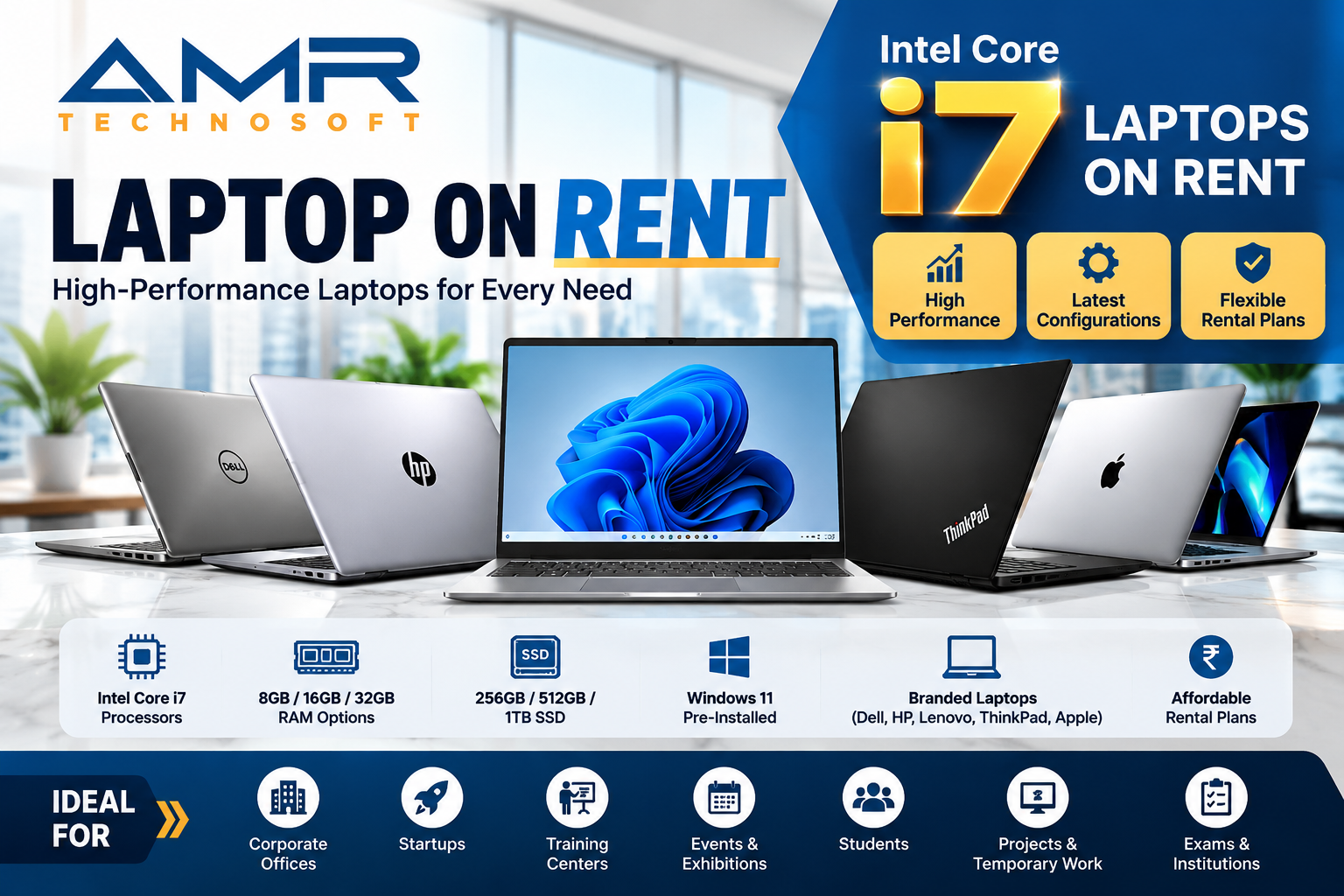
Q3. What specifications should I prioritize when selecting a laptop for remote work? For remote work, prioritize laptops with modern processors like Intel Core i5 or i7, or AMD Ryzen 5 or 7, which provide excellent multitasking performance. Additionally, consider adequate RAM, storage capacity, security features like biometric authentication, and compliance with industry-specific regulations depending on your sector.
Q4. How does the laptop rental process typically work? Laptop rental involves selecting devices based on your specifications, receiving pre-configured equipment delivered directly to your location, and paying fixed monthly fees. Providers handle maintenance, replacements, security updates, and asset tracking. When the rental period ends or employees leave, devices are returned using prepaid labels for secure data wiping and redeployment.
Q5. What are the tax advantages of renting laptops versus buying them? Rental payments qualify as fully deductible operational expenses in the same financial year, providing immediate tax relief. In contrast, purchased laptops depreciate at 40% annually with declining deductions over time. This operational expense treatment can reduce effective costs by 20-30% depending on corporate tax rates while simplifying accounting procedures.