A guide from AMR Technosoft on why more students, freelancers, and businesses are choosing not to own their laptops anymore
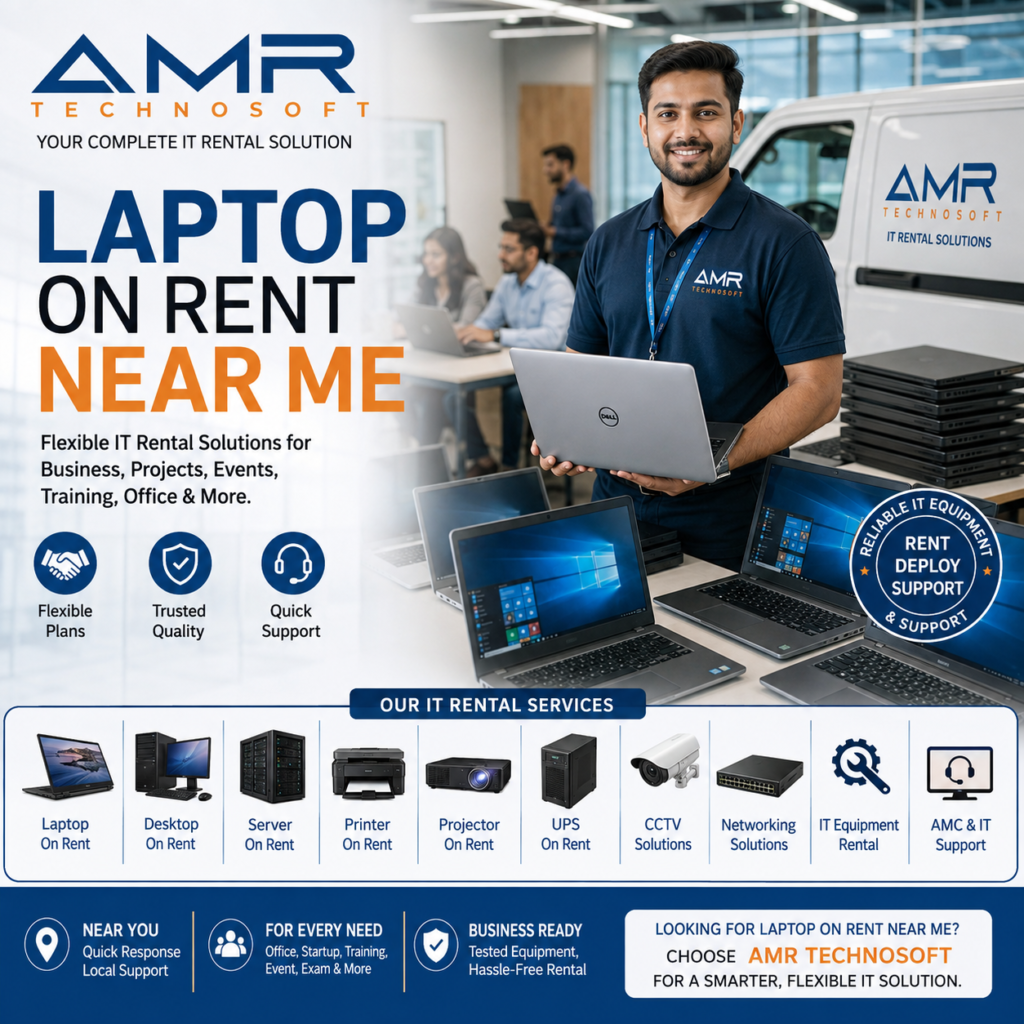
A few years ago, if you told someone you were renting a laptop instead of buying one, they’d probably assume you were short on cash or waiting for a “real” purchase down the line. That assumption doesn’t hold up anymore. Walk into any startup office in Delhi, sit in on a college WhatsApp group during exam season, or talk to an event planner the week before a big conference, and you’ll find the same thing happening: people are choosing to rent laptops on purpose, not as a last resort.
Something shifted. And once you look closely at the numbers — and at how unpredictable work has become — it’s not hard to see why.
This is the case for laptop renting, written by AMR Technosoft, a Delhi-based rental provider that’s been supplying everything from basic productivity laptops to serious workstations to students, startups, corporates, and event organizers across the NCR and beyond. We’re not neutral observers here — we run a rental business — but the argument holds up on its own merits, and we’ll walk through it honestly, hidden costs and all.
Why “just buy one” isn’t the obvious answer it used to be
Here’s a question worth sitting with for a second: when was the last time you bought something outright that you’ll only need for a few months?
Probably not often. We’ve gotten comfortable with subscriptions, leases, and pay-as-you-go arrangements for almost everything else — cars, software, even office space. Nobody blinks anymore at a company leasing its premises instead of buying a building. So why do laptops still get treated like a once-in-five-years purchase decision, even when the actual need behind them is often temporary?
Part of it is habit. Buying a laptop used to be the only real option, so it became the default nobody questioned. But defaults are worth questioning, especially when the thing you’re defaulting into has gotten this expensive to get wrong.
There’s also a technology problem hiding underneath this. Laptops used to age gracefully — a machine bought in 2015 could still limp along reasonably well in 2019. That’s not really true anymore. Processor jumps, RAM requirements, and even the demands of a basic video call have all crept up fast enough that a laptop can feel noticeably behind within two years. If you buy today, you’re betting that today’s specs will still feel fine well into the future. That’s a bet a lot of people are quietly losing.
And then there’s the nature of work itself. Fewer people are in the same job, doing the same tasks, for the same duration, year after year. Projects start and end. Teams grow in bursts and then plateau. A six-month contract might need five laptops in March and none in September. None of this matches well with a purchase model built for long, stable ownership.
What renting a laptop actually looks like today
Let’s clear up a misconception first, because it matters: laptop rental isn’t handing over a battered old ThinkPad for a flat weekly fee and hoping it survives. It’s a proper service now.
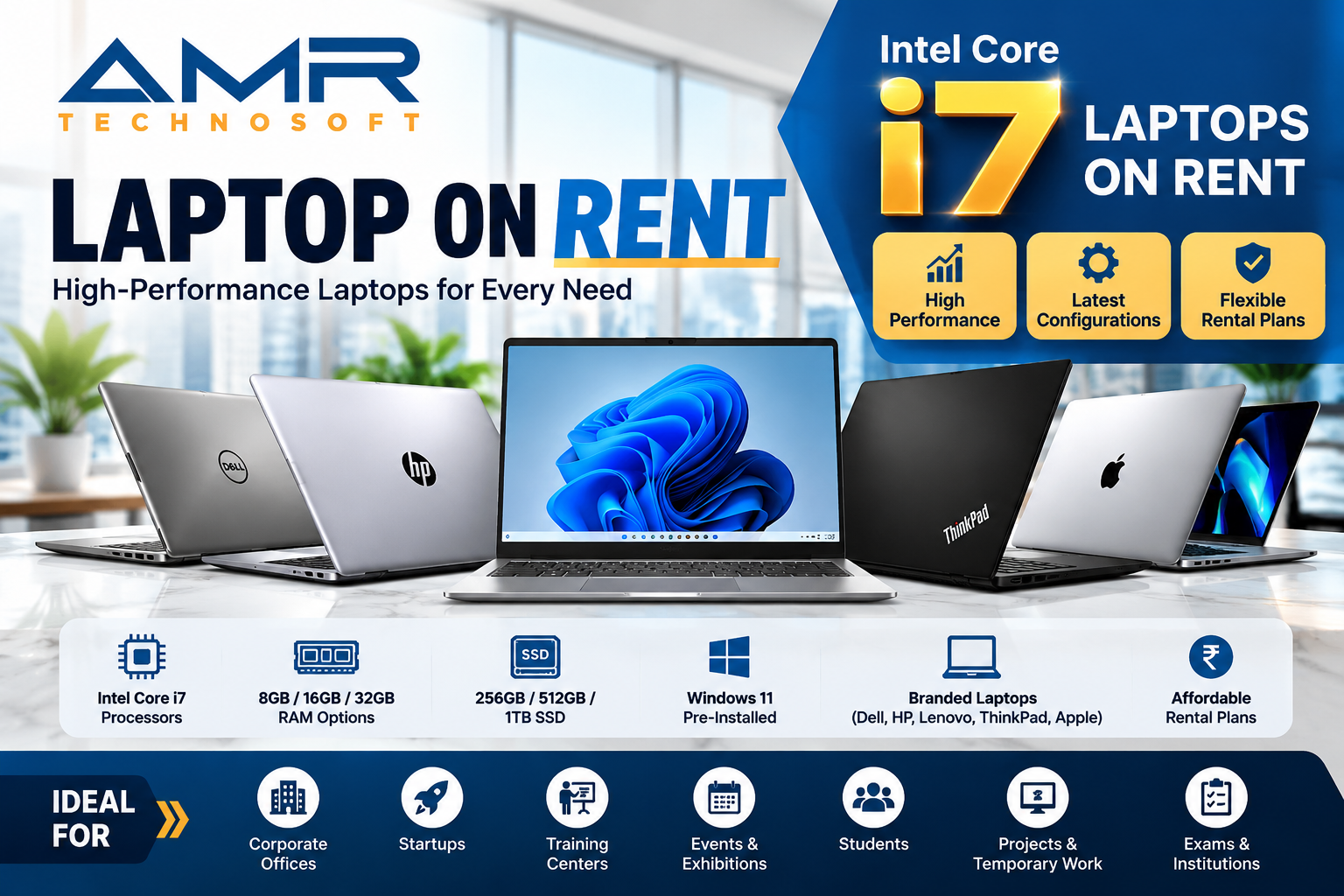
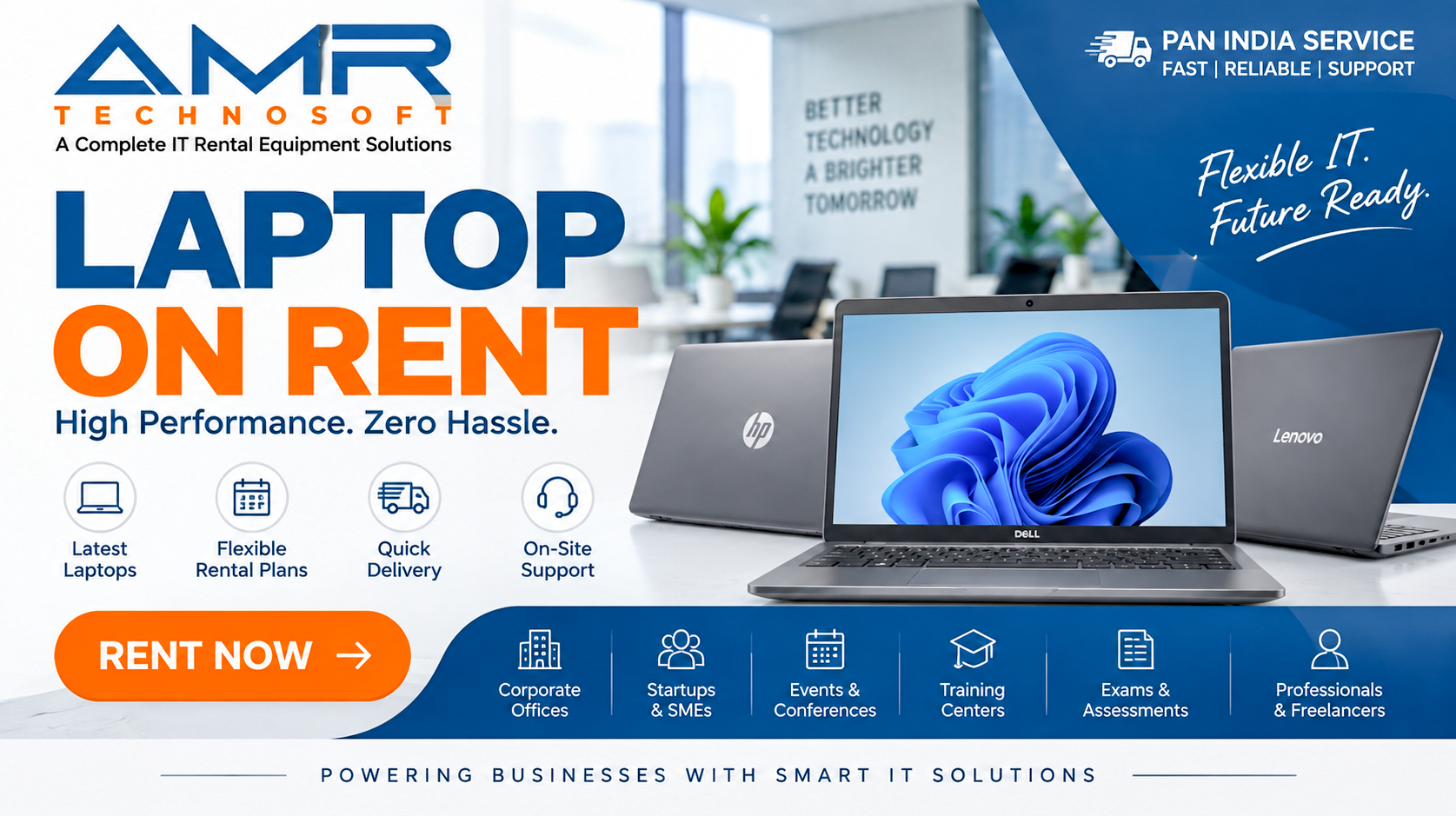
When you rent through a provider like AMR Technosoft, you’re choosing from real inventory — Dell, HP, Lenovo, Apple, spanning basic laptops all the way to high-spec machines with serious RAM and dedicated graphics. You pick a duration that actually matches your need, whether that’s three days or a full year. The laptop shows up set up and ready to go. If something breaks, it gets fixed or swapped out — fast, because a rental provider that leaves you stuck for a week doesn’t stay in business long. And when you’re done, you hand it back. No resale headache, no guilt about a laptop gathering dust in a drawer.
That last part is worth sitting with too, because it’s the piece people tend to forget when they’re weighing “rent vs. buy.”
The real cost of owning a laptop (it’s not just the price tag)
Most people compare renting to buying by looking at one number: the purchase price versus the rental fee. That’s an incomplete comparison, and it makes buying look better than it actually is.
Here’s what the sticker price doesn’t include.
Depreciation. Laptops lose a huge chunk of their value fast — often 20 to 30 percent in year one alone, and more after that. You paid full price. A few years later, you’re sitting on something worth a fraction of what you spent, with no real way to get that money back. Nobody writes this down as an expense, but it is one.
Repairs. Screens crack. Batteries swell and die. Keyboards stop registering keys. When you own the device, every one of these is entirely your problem — your time chasing a technician, your money if it’s out of warranty, and your week of reduced productivity while it’s in for repair.
Falling behind. As covered above, “upgrading” when you own a laptop means buying an entirely new one. Full price, again, plus the hassle of moving your files and getting used to a new machine.
Downtime nobody accounts for. If you run a team, every hour someone spends waiting on IT, or working on a laptop that’s clearly past its best, is an hour you paid for and didn’t get. This is invisible on a spreadsheet but very real in lost output.
Capital you can’t use elsewhere. For a startup especially, every rupee spent on hardware is a rupee not spent on hiring or marketing or simply staying alive a bit longer. Buying twenty laptops for a new team isn’t just an expense line — it’s money frozen in something that loses value every month.
Add all of that up over two or three years, and the real cost of owning a laptop is quietly much higher than the number on the box. That gap — between what people think ownership costs and what it actually costs — is basically the whole case for renting.
So what does renting actually get you?
It’s cheaper than most people expect. Once you factor in depreciation, repairs, and everything else above, businesses that rent instead of buy typically see savings in the range of 60 to 80 percent compared to the full cost of ownership. For an individual renting for a short project or trip, the gap is just as obvious — you’re paying for the days you actually use the machine, not for years of ownership you don’t need.
You get the right machine for the job, every time. Own one laptop and it has to be a compromise — good enough for everything, great at nothing. Rent, and you can grab a high-RAM workstation for a rendering-heavy month and a light, battery-friendly ultrabook for a conference trip the next. Your equipment stops being the bottleneck.
Your timeline drives the decision, not the other way around. Projects rarely run exactly as planned — they stretch, shrink, or get cancelled halfway through. With daily, weekly, monthly, and annual plans, you can match your commitment to reality instead of guessing years ahead, which is what buying essentially forces you to do.
Depreciation becomes someone else’s problem. You use the laptop, you return it, you walk away. No trying to sell a two-year-old machine on OLX for a third of what you paid.
Maintenance is baked in. This one’s underrated. A decent rental provider handles servicing and troubleshooting through your entire rental period, and swaps out a faulty unit quickly if something goes wrong. That’s a meaningfully different experience from waiting on a manufacturer’s warranty process while your work sits stalled.
Teams can scale without a procurement headache. Hiring five people this month and twenty-five next month isn’t unusual for a growing company anymore. Buying in that scenario means either overspending early “just in case,” or scrambling every time headcount jumps. Renting just flexes with you.
It tends to sit better on the books. For registered businesses, rental payments are generally treated as an operating expense rather than a capital purchase, which often means a more immediate deduction rather than depreciating an asset over several years. It also keeps the balance sheet lighter — something investors and lenders do actually notice. (Tax treatment varies by business structure, so it’s worth a quick conversation with your accountant rather than taking this as universal advice.)
You’re not locked in. No years-long commitment to a brand or a spec you picked once and now have to live with.
It’s a lighter footprint, environmentally. E-waste is a real and growing problem, and it’s largely driven by people replacing devices every few years. Rental providers keep machines circulating longer — refurbished and redeployed to the next renter — instead of every single person needing a freshly manufactured laptop. It’s a small thing individually, but it adds up at scale.
You can test before you commit. Curious whether a particular laptop actually suits how you work before spending real money on it? Rent it for a couple of weeks first. Cheap way to avoid an expensive mistake.
Who’s actually renting laptops right now
It’s not just big companies running conferences, though that’s part of it. The range is wider than people assume.
Students dealing with a rough patch — a laptop that died two weeks before finals, or a semester where buying a machine outright just isn’t in the family budget — get a reliable device for exactly as long as they need it.
Freelancers, whose income and project types swing month to month, rent the specific machine each job calls for instead of owning one general-purpose laptop that’s overkill for some work and underpowered for the rest.
Startups equip new hires fast without tying up cash they’d rather spend on growth, and can scale their laptop fleet up or down as headcount shifts.
Corporates use rentals to onboard staff without procurement delays, run training sessions that need a batch of identical machines for a few days, or hand a spare laptop to someone travelling for business.
Event organizers renting fifty laptops for a three-day conference is about as clear a use case as exists — buying fifty machines you’ll use three days a year makes no sense under any framing.
Travellers, business or otherwise, would rather not lug a personal laptop through airport security and unfamiliar hotel rooms when a rented one is waiting at the destination.
And gamers and tech enthusiasts get to try a flagship machine with a serious graphics card for a fraction of what buying one outright would cost — genuinely useful if you’re deciding whether it’s worth the investment at all.
Where AMR Technosoft fits into this
We’ve built our service around solving the actual friction points people run into with renting, rather than just offering machines at a price.
The inventory is real, not an afterthought. Dell, HP, Lenovo, Apple — everything from straightforward productivity laptops to Dell Precision workstations running Intel Core Ultra processors with 64GB of RAM and multi-terabyte NVMe storage for heavier workloads. Every device is checked before it goes out, so you’re not gambling on what shows up.
Pricing is upfront. Rentals start around ₹33 a day for basic models and go up to roughly ₹250 a day for premium, high-performance machines, depending on spec and duration. What you’re quoted is what you pay — no charges buried in fine print that show up later.
Plans match how long you actually need the thing. Daily, weekly, monthly, annual — whatever fits a five-day event or a year-long deployment without forcing you into a rigid structure that doesn’t match your timeline.
Delivery is fast. We’re based in Delhi, and we offer same-day delivery across the NCR, with service reach across India more broadly. Laptops arrive configured and ready to use, not as a box you’re left setting up at 11pm before a deadline.
Support runs around the clock. Technical assistance is available 24/7, and if a rented machine develops a fault, we prioritize a quick swap rather than leaving you stuck mid-project.
We work specifically with startups and SMEs. A lot of our business is early-stage companies trying to equip a growing team without the financial burden of buying outright — flexible plans and maintenance built to support that kind of growth stage rather than penalize it.
None of this replaces doing your own homework on a provider — check reviews, ask about their replacement policy, understand what happens if a device gets damaged. But this is the standard we hold ourselves to, and it’s the standard worth expecting from anyone you rent from.
How the process actually goes
If you haven’t rented before, here’s roughly what to expect.
Start by getting clear on what you actually need — the use case, the specs that matter (processor, RAM, storage, screen size), how many units, and for how long. Reach out for a quote; a good provider will recommend models that fit and give you clear pricing without pressure. Confirm the order, and delivery should happen fast — same-day or next-day in serviceable areas, because rental needs are usually time-sensitive by nature. The laptop arrives ready to use. Through the rental period, support should be available if anything goes wrong, with a quick replacement if it does. And as your end date approaches, you extend if the project’s run long, return it if you’re finished, or switch models if your needs have changed.
That last bit of flexibility is really the whole point — none of this is available once you’ve bought something outright.
Renting vs. buying, side by side
| Buying | Renting | |
|---|---|---|
| Upfront cost | High, paid all at once | A fraction, spread over the rental term |
| Who eats the depreciation | You | The rental provider |
| Access to current tech | Frozen at your purchase date | Upgrade whenever your needs change |
| Repairs | Your problem, often slow and costly | Usually included, fast replacement |
| Flexibility | Basically none once bought | Daily to annual, adjust as you go |
| Scaling a team | Slow, capital-heavy | Fast, matches headcount |
| Effect on cash flow | Locks up capital | Frees it up as an operating cost |
| Tax treatment (business) | Capital expense, depreciated over years | Often deductible as an operating expense |
| What happens at the end | Resale hassle or e-waste | Just hand it back |
| Makes most sense for | Long-term, stable, single-user situations | Pretty much everything else |
A few real situations where this plays out
A 15-person startup lands a client and has to hire ten people within a month. Buying ten laptops means a large cash outlay at the exact moment cash flow is tightest. Renting gets the team equipped within days, and if the contract ends in six months, the laptops just go back — no leftover hardware to store or resell.
A conference organizer needs fifty laptops for a three-day summit. Buying fifty machines for three days a year isn’t a decision that survives contact with a spreadsheet. A rental provider delivers, sets up, and collects them afterward, and the organizer walks away with zero inventory to manage.
A remote-first company hiring across different cities needs new employees working from day one, without waiting on local procurement in each location. A provider with wide delivery coverage ships a ready-to-go laptop straight to each new hire.
A student’s laptop dies two weeks before finals, and buying a replacement right now isn’t realistic for the family budget. Renting one for a month closes the gap without the pressure of an unplanned major purchase.
A freelance video editor takes on a project that needs far more processing power than their usual setup. Renting a high-spec machine for the eight-week job gets it delivered on time, without buying capacity they might not need again for months.
Different situations, same underlying logic: the need is real, but it’s temporary or it keeps shifting, and renting matches the solution to that instead of overcommitting.
Picking the right machine for what you’re actually doing
One thing renting makes easy that buying doesn’t: you can pick a laptop specifically for the task in front of you, instead of one general machine trying to cover everything.
For everyday work — email, browsing, documents, video calls, online classes — a mid-range laptop with a decent processor and 8-16GB of RAM is plenty, and it’s the cheapest tier to rent, so there’s no reason to pay for power you won’t use.
For business travel and client-facing work, something light with strong battery life and solid build quality matters more than raw horsepower — Dell and Lenovo’s business lines tend to hold up well here.
For design and video editing, you want more RAM, faster storage, and often a dedicated graphics card — this is where a MacBook or a higher-spec Dell Precision earns its keep, and where renting saves the most money relative to buying, since these machines are the most expensive to purchase outright.
For development and data work, higher RAM and strong multi-core performance matter, especially if you’re running several environments at once — and since these needs vary a lot from project to project, renting the right spec for each one beats owning a single fixed configuration.
For events and training sessions, the priority shifts from raw specs to consistency across a large batch delivered and set up on schedule — this is really a logistics problem more than a hardware one, and it’s exactly where a rental provider’s delivery and pickup process earns its value.
For gaming or just wanting to try flagship hardware, renting removes the financial risk entirely — you get the experience without a five- or six-figure commitment, and you can decide afterward whether it’s actually worth owning.
Where this is all heading
This isn’t a passing trend. The global computer rental market is projected to reach around $5.5 billion by 2032, and in India specifically, the segment has been growing at a healthy clip, pushed along by the startup boom, the normalization of remote and hybrid work, and a broader shift toward not tying up capital in depreciating equipment.
Hybrid work didn’t fully go away after the pandemic eased — it settled into being permanent for a lot of companies, and that keeps demand for flexible, on-demand equipment high. Rental providers are also stocking a wider range of specialized machines now — AI-capable laptops, high-performance creative workstations, more energy-efficient models — giving renters access to categories of hardware that would be an even bigger ask to buy outright. And as sustainability becomes less optional for businesses, the fact that a rental model keeps devices in circulation longer instead of every renter needing a brand-new machine is turning into a genuine selling point, not just a nice side effect.
Maybe the biggest shift, though, is just in how renting is perceived. It used to read as a compromise. Now it reads — correctly — as the more deliberate, better-thought-through choice.
A few questions people usually ask
Does renting only make sense for really short periods?
No — it’s obviously efficient for a week-long trip or a three-day event, but it holds up just as well for several months to a year, especially for businesses that value flexibility and don’t want capital tied up. Most providers, AMR Technosoft included, offer monthly and annual plans for exactly this reason.
What if the laptop gets damaged while I have it?
This depends on the provider, so it’s worth asking upfront. A reputable one will distinguish normal wear from accidental damage and have a straightforward process rather than surprise penalty charges.
Can specific software come pre-installed?
Often, yes — particularly for business use. Worth raising when you’re getting your quote.
Is this only worth it for businesses, or does it work for individuals too?
Both. Businesses get the tax and capital-efficiency angle, but individuals — students, freelancers, travellers — get the same core benefit: lower upfront cost, no long-term commitment, and someone else handling maintenance.
What happens if my timeline changes?
This is where renting really separates itself from buying. Extend if the project runs long, return early if it wraps up sooner. Try doing either of those with a laptop you already own.
Conclusion:
For a long time, buying a laptop was just what you did — the responsible, default move, with renting reserved for people who couldn’t manage the “real” purchase. That thinking doesn’t really track anymore, not against how work, projects, and technology actually move today.
Once you count the full cost of ownership — depreciation, repairs, falling behind on specs, downtime, capital sitting idle — renting comes out ahead in most real situations: students getting through a rough semester, freelancers riding out unpredictable project cycles, startups scaling teams in bursts, corporates onboarding staff or running events, travellers who’d rather not carry a laptop through three airports.
Renting gets you what you need, for as long as you actually need it, with maintenance and support built in — and it frees up money, time, and mental bandwidth for whatever actually matters to you or your business.
At AMR Technosoft, that’s the whole idea behind how we operate: a solid range of checked, quality laptops from brands people trust, pricing that’s upfront about what you’re paying, plans that go from a single day to a full year, fast delivery across Delhi NCR and beyond, and support that’s actually there when something goes wrong.
So next time the old question comes up — should I just buy a laptop for this — it’s worth asking a better one first: do I need to own this, or do I just need to use it for a while?
For a growing number of people, the honest answer is the second one.
Need a laptop for a project, a team, or an event? AMR Technosoft offers flexible daily, weekly, monthly, and annual rental plans across leading brands, with fast delivery across Delhi NCR and service reach across India. Get in touch and we’ll help you find the right machine for what you’re actually doi