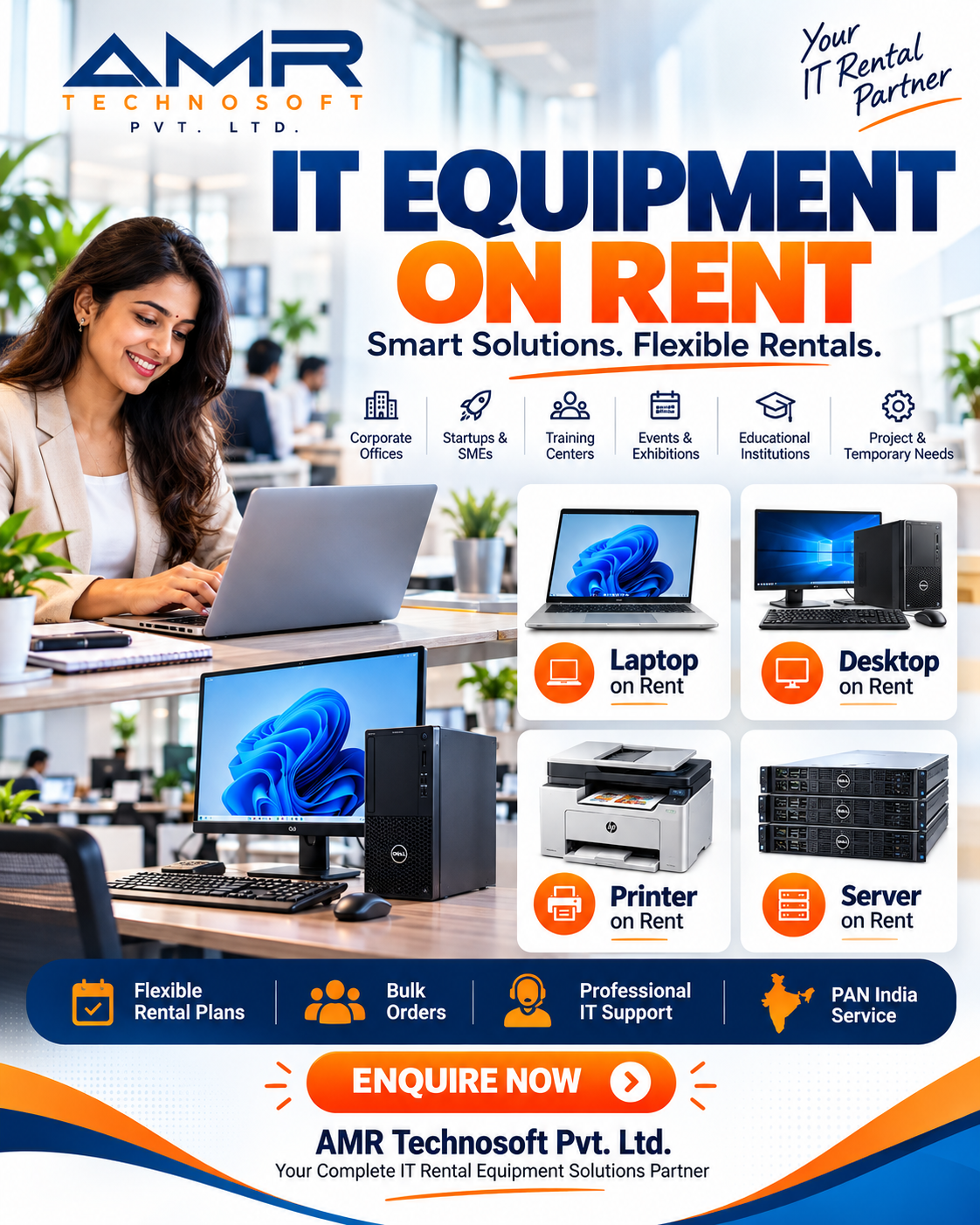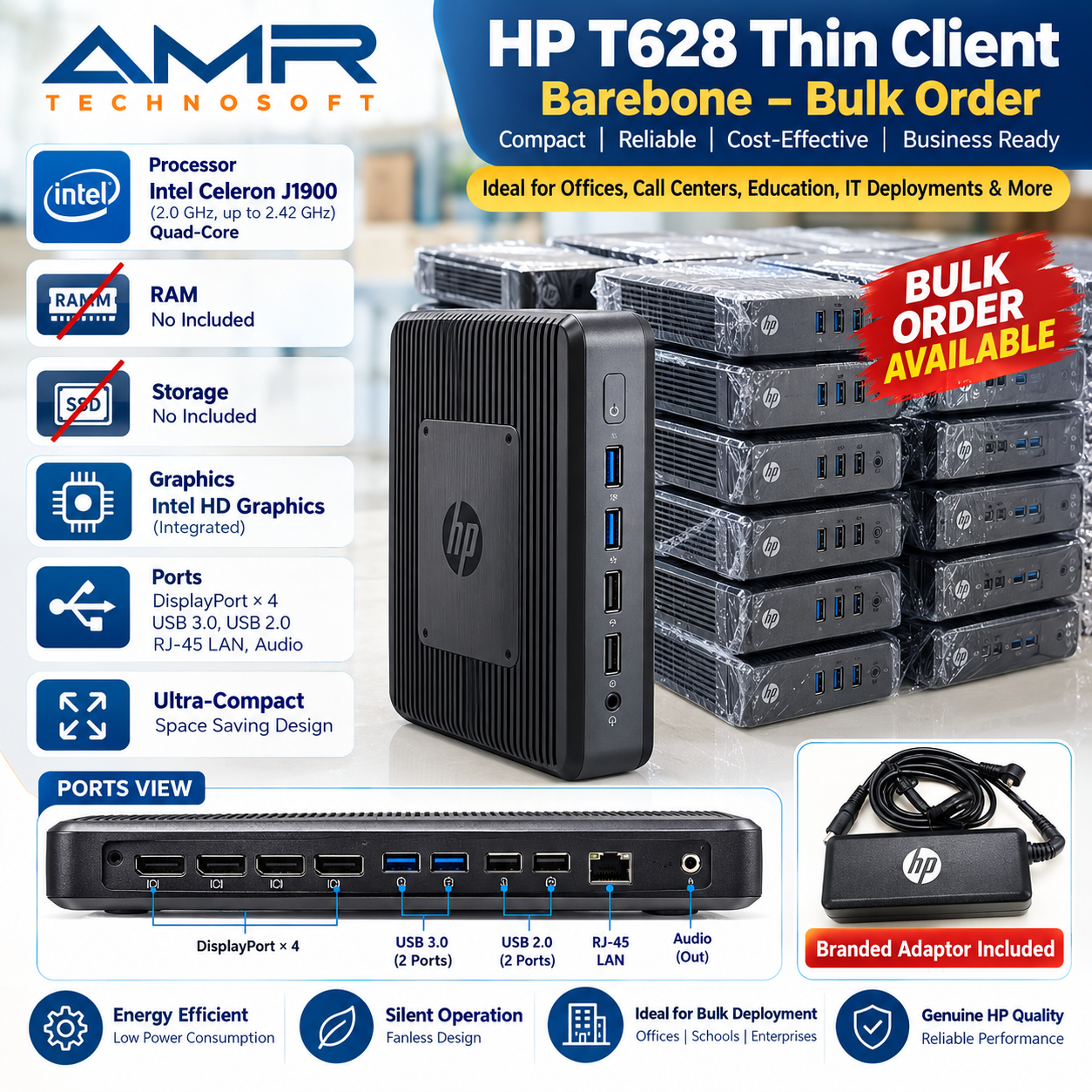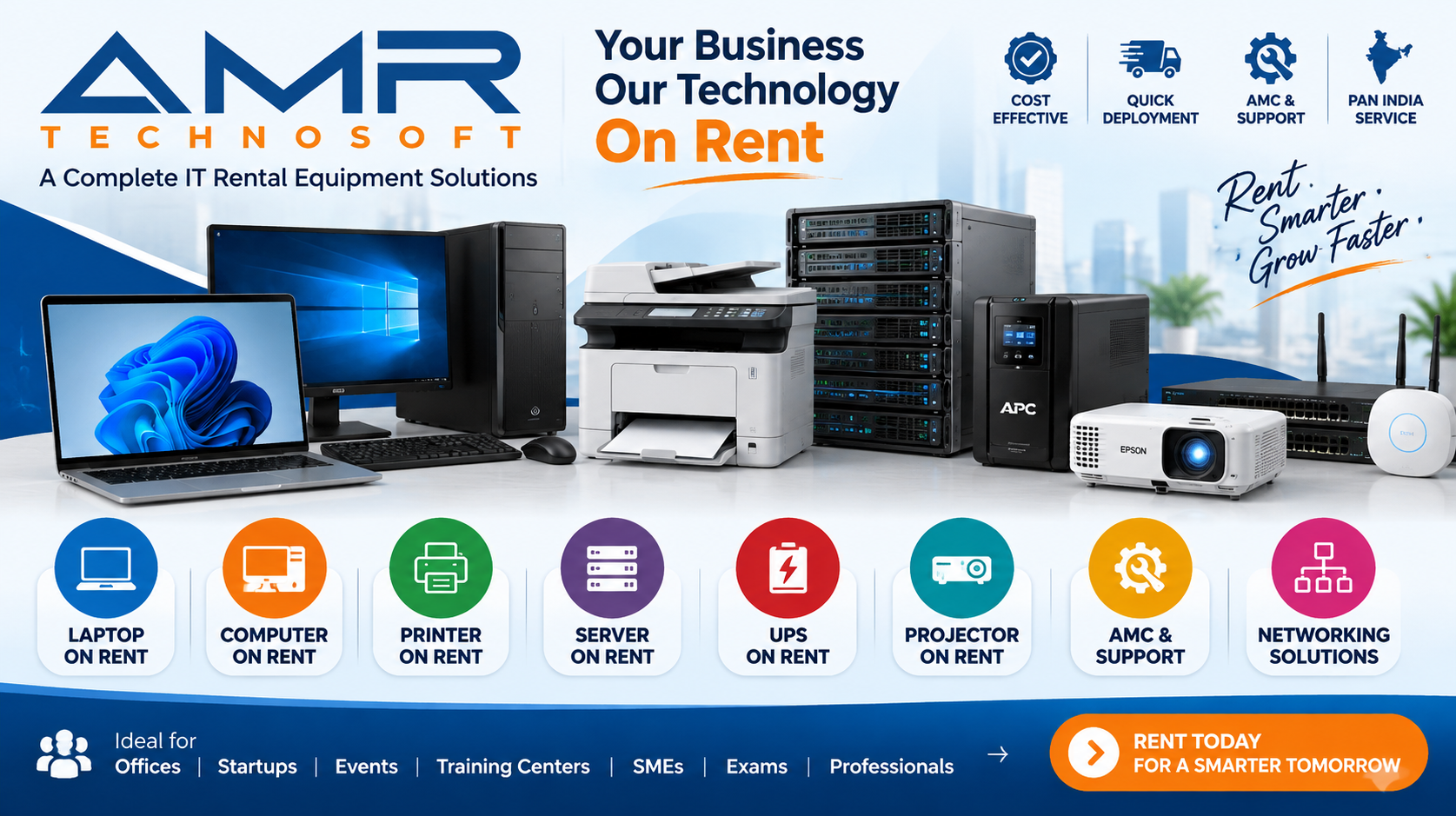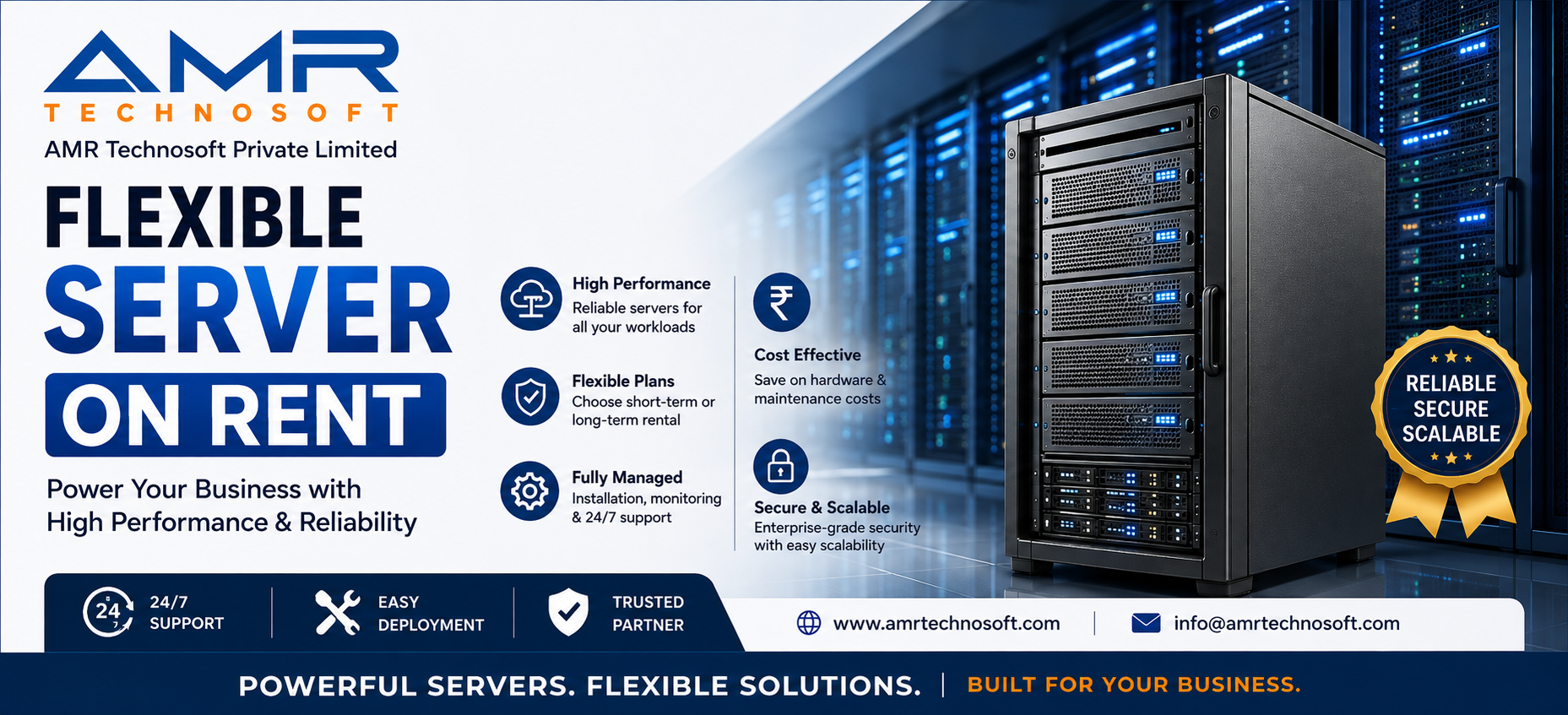
A Complete IT Equipment Solution for All Kinds of Rental Products Available – www.amrtechnosoft.com
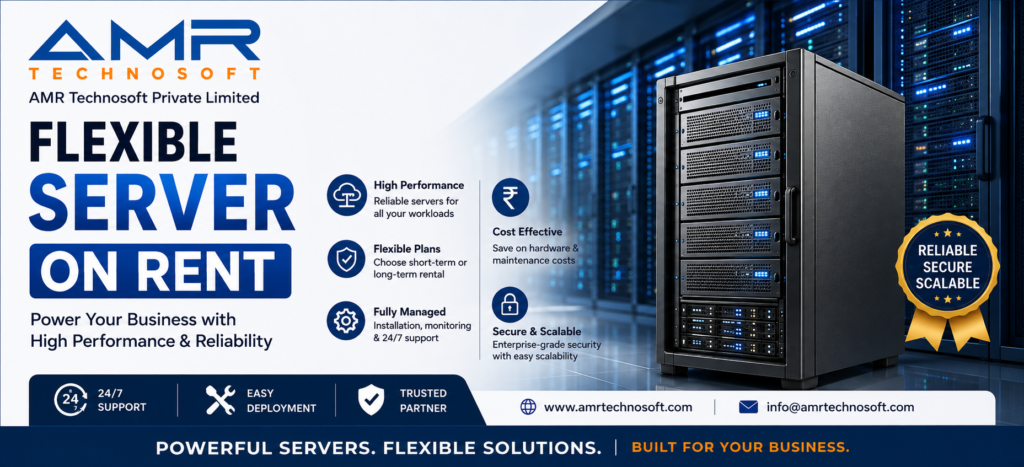
Buying Servers Outright Doesn’t Make Sense for Everyone Anymore
There was a time when setting up IT infrastructure meant one thing: buy the hardware, pay a big chunk of money upfront, and hope your capacity planning was right for the next three or four years. That’s just not how a lot of businesses operate today, especially somewhere like Delhi, where startups scale unpredictably, project timelines shift constantly, and locking up capital in depreciating hardware isn’t exactly appealing.
That’s the whole reason “flexible server rental” has turned into such a common search these days. Instead of dropping lakhs of rupees on equipment that might be outdated in two years, a growing number of businesses are renting servers on flexible terms instead — sometimes daily, sometimes monthly, sometimes for the length of one specific project — and adjusting that setup as their actual needs shift.
Here’s a real walkthrough of what flexible server rental means in practice, who it actually helps, roughly what it costs in Delhi right now, what to watch out for before signing anything, and the mistakes people commonly make when they rent for the first time.
What “Flexible” Actually Means Here
Flexible server rental is fairly self-explanatory once you break it down: you’re renting physical server hardware — a tower server, rack server, blade server, whatever fits your setup — for a set period, and you have room to adjust that arrangement as things change, instead of being locked into one rigid contract or dropping a huge upfront purchase.
The flexibility usually shows up in a handful of ways:
- Rental lengths that actually flex — some providers will rent for a few days, others for a year or more, without forcing everyone into the same box.
- Configurations that can grow with you — start with something modest and bump up the RAM, storage, or processing power later without having to return the whole unit and restart the process.
- Billing that isn’t just one giant lump sum — pay-as-you-go or installment structures tied to your actual usage period rather than one massive payment upfront.
- Swapping hardware when it’s not quite right — a decent provider will let you trade for a different configuration if what you rented doesn’t match your workload, rather than leaving you stuck with the wrong setup for months.
Worth noting: this is different from cloud hosting, which is virtual and accessed remotely. Flexible server rental is physical hardware — delivered to your office, data center, or event space — that you actually control for however long you’ve rented it.
Who’s Actually Renting Servers in Delhi Right Now
Startups and companies growing fast. Nobody at an early-stage company really knows what their server needs will look like a year out. Renting lets them match infrastructure to actual growth instead of guessing (and usually overspending) on day one.
IT firms working on short-term client projects. Development shops, testing teams, and consultancies often need extra server capacity for one specific project, then don’t need it once that project’s done. Renting means they’re not stuck owning hardware that just sits there afterward.
Event and exhibition organizers. Delhi runs an enormous number of trade shows and conferences year-round, plenty of which need temporary server setups for registration systems, live data handling, or on-site networking — exactly the kind of short window flexible rental was made for.
Colleges and training institutes. Extra server capacity is often only needed during a specific semester or training batch, not year-round, which makes renting a lot more sensible than owning.
Companies mid-migration or upgrading systems. When a business is switching between systems, a temporary rented server can bridge that gap without disrupting operations or forcing a rushed permanent buy.
Media and post-production studios. Rendering and heavy file processing demand real server power, but usually only during active production windows — making rental far more economical than letting expensive hardware sit idle between projects.
Businesses building out backup and disaster recovery. Some companies rent servers purely as standby infrastructure, ready to deploy fast if something goes wrong with their primary systems, without the cost of maintaining redundant hardware permanently.
What You Can Actually Rent
Tower servers — compact, standalone, usually the cheapest entry point, good for small businesses or short-term needs that don’t require rack mounting.
Rack servers — built to sit in a server rack with other units, common if you’re already running a data center setup or need multiple servers working together.
Blade servers — pack a lot of computing power into a small physical footprint, generally rented by larger organizations with heavier processing demands.
Dedicated GPU servers — becoming a lot more common as businesses take on AI workloads, rendering jobs, or heavy data analysis that needs real graphics processing power behind it.
Storage servers (NAS/SAN) — for businesses where the priority is storage rather than raw processing, useful for media companies, backup systems, or large databases.
Most rental providers around Delhi carry a mix of Dell PowerEdge, HP ProLiant, Lenovo ThinkSystem, and IBM hardware — largely because these are the same brands used heavily in corporate data centers, so there’s a steady, reliable supply cycling through the rental market.
Why Renting Beats Buying for a Lot of Businesses
You skip the massive upfront hit. A single enterprise server can run anywhere from ₹1.5 lakh to well over ₹10 lakh depending on specs. Renting gets you access to the same hardware for a fraction of that, spread across the period you actually need it.
You’re not stuck with aging hardware. Server tech moves fast, and buying locks you into whatever was current the day you purchased. Renting lets you upgrade to newer, more capable hardware each time your term renews.
Maintenance stops being your problem. Good rental providers typically handle maintenance, part swaps, and troubleshooting as part of the deal — genuinely useful if you don’t have a dedicated in-house IT team to deal with hardware failures.
Scaling up or down doesn’t waste money. Need more processing power for two months, then less afterward? Renting lets your infrastructure actually track that reality instead of owning something permanently over- or under-sized.
Cash flow stays in better shape. For startups especially, keeping capital free for hiring, marketing, or product work usually matters more than owning hardware outright. Renting turns a big capital expense into something more manageable on the books.
Enterprise-grade equipment becomes reachable. Renting can put high-end configurations within reach for smaller businesses that would never justify buying that level of hardware outright.
It removes the risk on uncertain projects. If you’re not sure how long you’ll actually need the extra capacity, buying is a real financial gamble. Renting takes that risk off the table entirely.
What It Actually Costs in Delhi Right Now
Pricing swings quite a bit depending on specs, how long you’re renting for, and whether you’re adding services like setup or on-site support. Still, here’s a rough sense of where things land:
Entry-level tower or rack servers — basic processing, moderate RAM, standard storage — generally rent somewhere between ₹3,000 and ₹8,000 a month, depending on the exact specs and provider.
Mid-range servers — stronger processors, more RAM, SSD storage, built for business applications or moderate workloads — usually fall between ₹8,000 and ₹20,000 a month.
High-end or GPU-equipped servers — heavy processing, AI workloads, rendering, large-scale data work — can run ₹20,000 up to ₹60,000+ a month depending on how much GPU muscle is involved.
Short-term rentals — days to a few weeks, common for events or temporary projects — tend to be priced per day, and the per-day rate usually works out higher than the equivalent monthly rate, since providers are factoring in setup and turnaround time.
Long-term rentals — six months to a year or beyond — generally come with a noticeably lower monthly rate, since providers prefer the stability of longer commitments.
Keep in mind, the headline rental price rarely tells the whole story. Delivery and setup fees, on-site support, network configuration, and insurance on the hardware often get charged separately. Always ask for the full breakdown before you sign anything.
What to Actually Check Before Signing Anything
Get the exact specs, not a vague category. “Rack server” or “high-performance server” tells you almost nothing on its own. Nail down the exact processor, RAM, storage type and size, and network capability in writing before you agree to anything.
Ask directly about uptime and hardware condition. A decent provider should be able to tell you how recently the unit was serviced and what happens if something fails mid-rental.
Understand what support actually looks like. Is someone coming on-site if there’s an issue, or are you shipping the unit back and waiting? For anything time-sensitive, local, responsive support in Delhi matters a lot more than it seems at first.
Ask specifically how upgrades or downgrades work. If your needs shift mid-rental, how easy is swapping configurations really? Don’t assume — ask the provider to walk you through the actual process.
Confirm delivery and setup timing upfront. Some providers can get a server delivered and configured in a day or two; others take a week or more. If you’re up against a deadline, this needs to be nailed down before you commit.
Read the insurance and damage policy carefully. Know exactly what you’re liable for if something happens to the hardware, and whether insurance comes included or needs buying separately.
Ask how they handle your data afterward. You’re renting physical hardware that eventually goes back to the provider, possibly to another customer. Confirm the wiping process before your rental period even starts.
Get it all in writing. Verbal promises about pricing, support, or flexibility mean nothing if a dispute comes up later. A real written agreement protects both sides.
Get more than one quote. Pricing and service quality vary a lot between providers in Delhi. Comparing at least two or three gives you actual leverage and a sense of what fair pricing looks like.
Mistakes People Make When Renting for the First Time
Chasing the cheapest quote without asking why it’s cheap. Sometimes it’s older hardware, weaker support, or fees that surface later. Weigh cost against reliability, not just the number on the page.
Underestimating what’s coming. If there’s a decent chance your workload grows during the rental period, it’s smarter to talk about a scalable setup now rather than scrambling to upgrade later under pressure.
Not actually reading the contract. Rental agreements can hide early-termination fees, damage liability terms, and renewal clauses that are easy to miss when you’re rushing to get set up.
Assuming support is included without confirming response times. If uptime matters to your business, find out exactly how fast the provider actually responds — not just that “support is included” somewhere in the fine print.
Forgetting about power and cooling. Higher-end servers, GPU units especially, can pull serious power and generate real heat. Make sure your space can handle it before the hardware shows up.
Not planning for the end of the rental. Know your data migration and return plan well before the term ends — not the week it’s due back.
Picking the Right Provider in Delhi
Local presence actually matters. A Delhi-based provider, or one with a real local support team, generally delivers faster and troubleshoots quicker on-site than someone operating remotely from another city.
How upfront are they about hardware condition? Good providers are honest about whether their servers are new, refurbished, or well-maintained used units, and can explain their testing and maintenance process without dodging the question.
Do they actually carry a range of configurations? A provider with just one or two server types isn’t much help once your needs shift. Look for genuinely varied inventory.
Check reviews, ask for references. Feedback from existing customers — especially ones with needs similar to yours — tells you far more than whatever the provider says about themselves.
Ask about contract flexibility directly, not just their marketing. Plenty of companies advertise “flexible rental” and then hand you a rigid contract. Ask specific questions about upgrade paths, early termination, and renewal terms before you sign.
Bundled services can save you a headache. Networking setup, data migration help, or maintenance packages included with the rental mean one less vendor to coordinate separately.
Rent, Buy, or Go Cloud? Here’s How They Actually Compare
Worth stepping back and putting flexible rental next to the other two obvious options.
| Buying Outright | Cloud Hosting | Flexible Server Rental | |
|---|---|---|---|
| Upfront cost | Very high | Low to none | Moderate, spread out |
| Hardware control | Full | None, it’s virtual | Full, it’s physical |
| Scaling flexibility | Low, needs new purchase | High, instant | Moderate to high, depends on provider |
| Data location | On-premise, fully yours | Provider’s data center | On-premise or provider-managed, your call |
| Best fit | Stable, predictable, long-term needs | Variable workloads, zero hardware hassle wanted | Medium-term needs, physical control required, budget matters |
If your business needs actual control over physical hardware — often the case for certain compliance requirements, data sensitivity, or specific software setups — but you don’t want the huge upfront cost or long commitment that comes with buying, flexible rental sits right in that middle lane. Cloud hosting makes more sense if physical access doesn’t matter and you want maximum scalability with zero hardware management. Buying outright generally only makes sense when your needs are stable and predictable enough that the hardware will still be relevant several years down the line.
Questions People Actually Ask
How fast can a rented server actually get delivered and set up in Delhi?
Depends on the provider, but plenty can deliver and configure a standard setup within a few days — sometimes faster if it’s a common configuration already in stock. Always confirm the real timeline if you’re working against a deadline.
Can I upgrade mid-contract if my needs grow?
With a genuinely flexible provider, yes — that’s really the whole point of renting over buying. Ask specifically how the upgrade process and pricing work before you sign.
Is support usually part of the rental price?
Varies. Some providers bundle basic support in, others charge extra for on-site or advanced support. Always get this clarified upfront rather than assuming.
What happens to my data once the rental ends?
A reputable provider follows a proper wiping process once hardware comes back. Ask about their specific data security policy before you even start using the server.
Is renting actually cheaper than buying long-term?
For short to medium-term needs, almost always yes. For very long, stable infrastructure needs stretching several years, buying can occasionally work out cheaper — though you’re trading that savings for being locked into aging hardware over time.
Can I rent for just one event or short project?
Yes, plenty of Delhi providers do short-term rentals specifically built for events, exhibitions, or temporary projects, usually priced daily or weekly.
Do providers offer both new and refurbished hardware?
Many do, with refurbished units usually priced lower. Ask about the condition, testing process, and whatever warranty covers the specific unit.
What’s the shortest rental period typically available?
Depends on the provider, but options usually range from just a few days for event needs up to multi-year terms for long-term infrastructure.
Conclusion:
Flexible server rental has become a genuinely sensible option for businesses across Delhi that need real server infrastructure without the enormous upfront cost or long-term lock-in of buying outright. Whether that’s a startup scaling unpredictably, an IT firm on a short-term client project, an event organizer needing something temporary, or a company bridging a system migration, renting puts enterprise-grade hardware within reach on terms that actually match how the business operates day to day.
Getting it right comes down to the basics: know your exact specs, pick a provider with real local presence and honest policies, get everything in writing, and don’t settle for the first quote you get. Nail those, and flexible server rental turns into one of the smarter infrastructure calls a growing Delhi business can make.