Renting IT Products in India: How AMR Technosoft Is Quietly Changing the Way People Think About Owning a Laptop
There’s a conversation happening in offices, WhatsApp groups, and startup Slack channels across India right now, and it goes something like this: “Do we really need to buy this laptop, or can we just rent it?”
Five years ago that question would’ve sounded a little odd. Renting a laptop felt like something you did only if you were truly stuck — maybe your own machine broke down right before a big deadline, and you scrambled to find some local shop willing to lend you a device for a week. It wasn’t a real strategy. It was a stopgap.
That’s not really the case anymore. Somewhere along the way, renting IT equipment stopped being a last resort and started becoming a first choice for a huge number of people — students, startups, freelancers, even fairly large companies. And platforms like Amrkart have had a lot to do with that shift, simply by making the whole process feel less like a gamble and more like, well, a normal way to get a laptop.
I want to walk through why this is happening, what’s actually available to rent, who’s doing it, and whether it might make sense for you too — without dressing it up more than it needs to be.
Why Would Anyone Rent a Laptop Instead of Just Buying One?
Honestly? Money is the obvious answer, but it’s not the whole answer.
Think about how fast things change now. A laptop that felt fast two years ago might already be struggling to keep up with a browser full of tabs, a couple of Zoom calls, and whatever heavier software your job demands. Buying a laptop used to be a five-year decision. It’s starting to feel more like an eighteen-month one, at least for people whose work depends on staying current.
At the same time, a lot of the people who need laptops most — students, freelancers just starting out, small teams testing a new business idea — don’t actually have five years of certainty about what they’ll need. A student might only need a powerful laptop for one semester’s project. A startup might hire fifteen people for a six-month contract and have no idea if that team will still exist a year from now. Buying outright in these situations doesn’t just cost money — it locks you into a decision you’re not even sure you want to make.
Renting solves that. Not perfectly, not for everyone, but for a genuinely large slice of people, it just fits better.
What AMR Technosoft Actually Offers
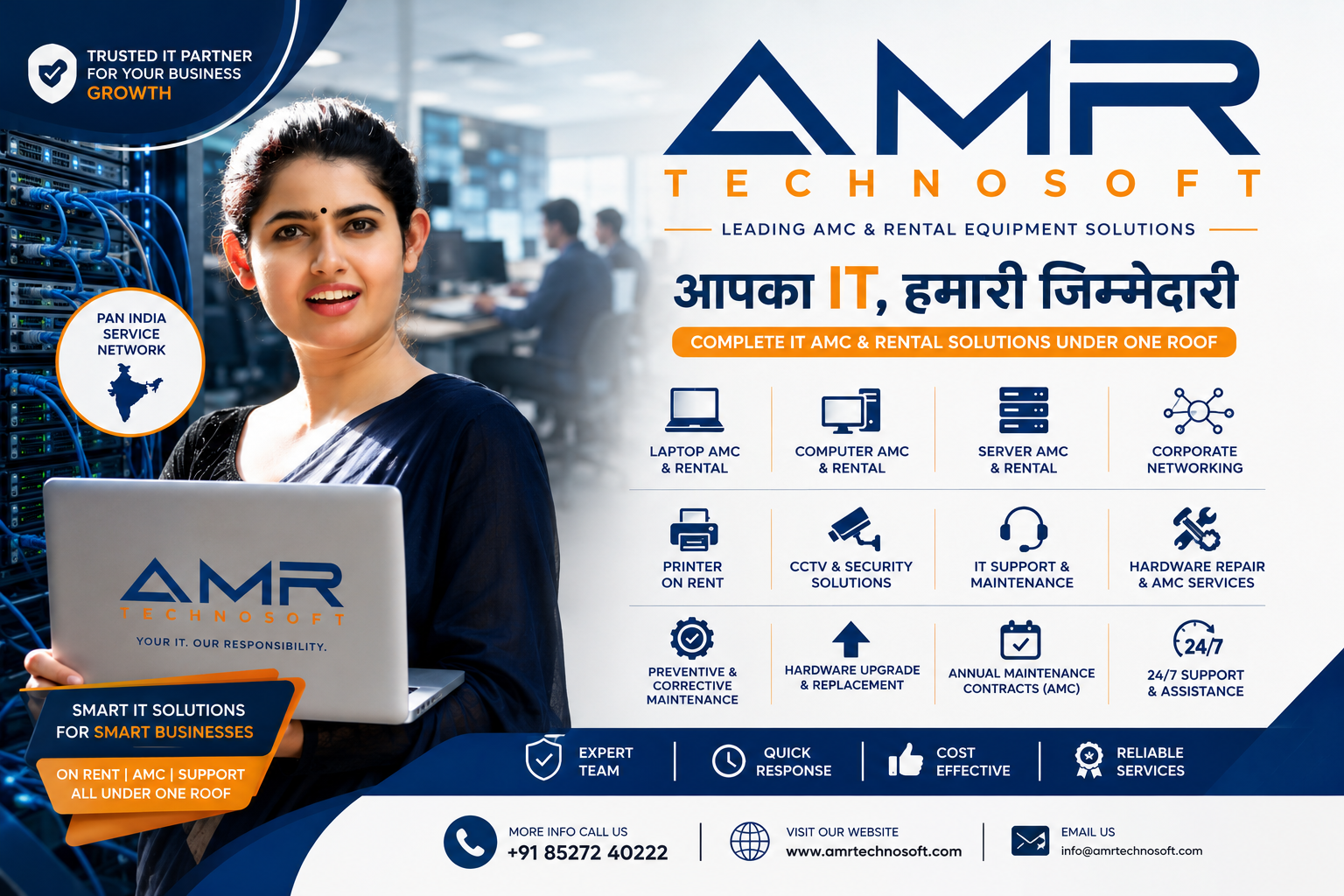
AMR Technosoft has built itself into one of the more recognizable names in India’s IT rental space, and honestly, the reason isn’t complicated — it just does the basics well, which turns out to be rarer than you’d think in this industry.
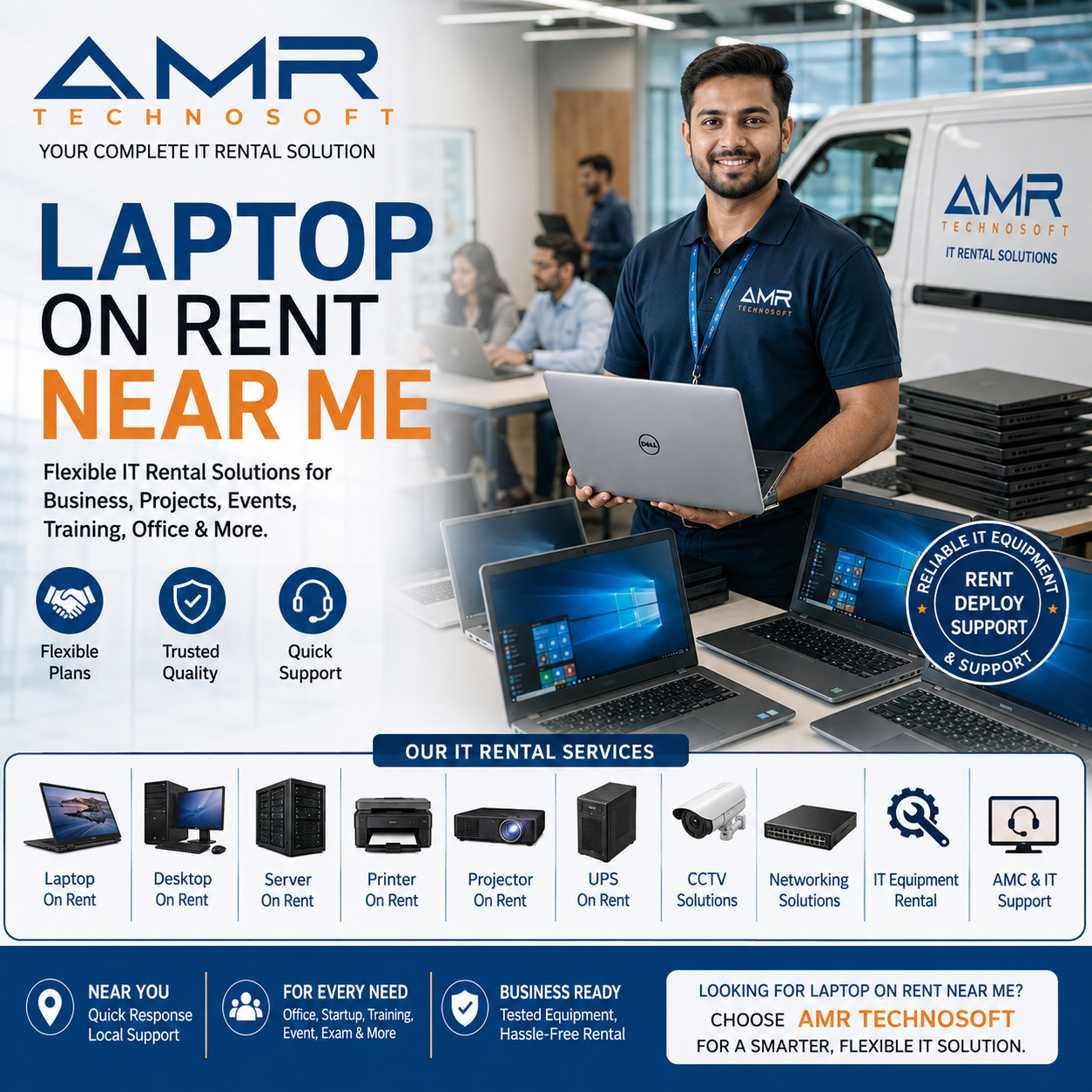
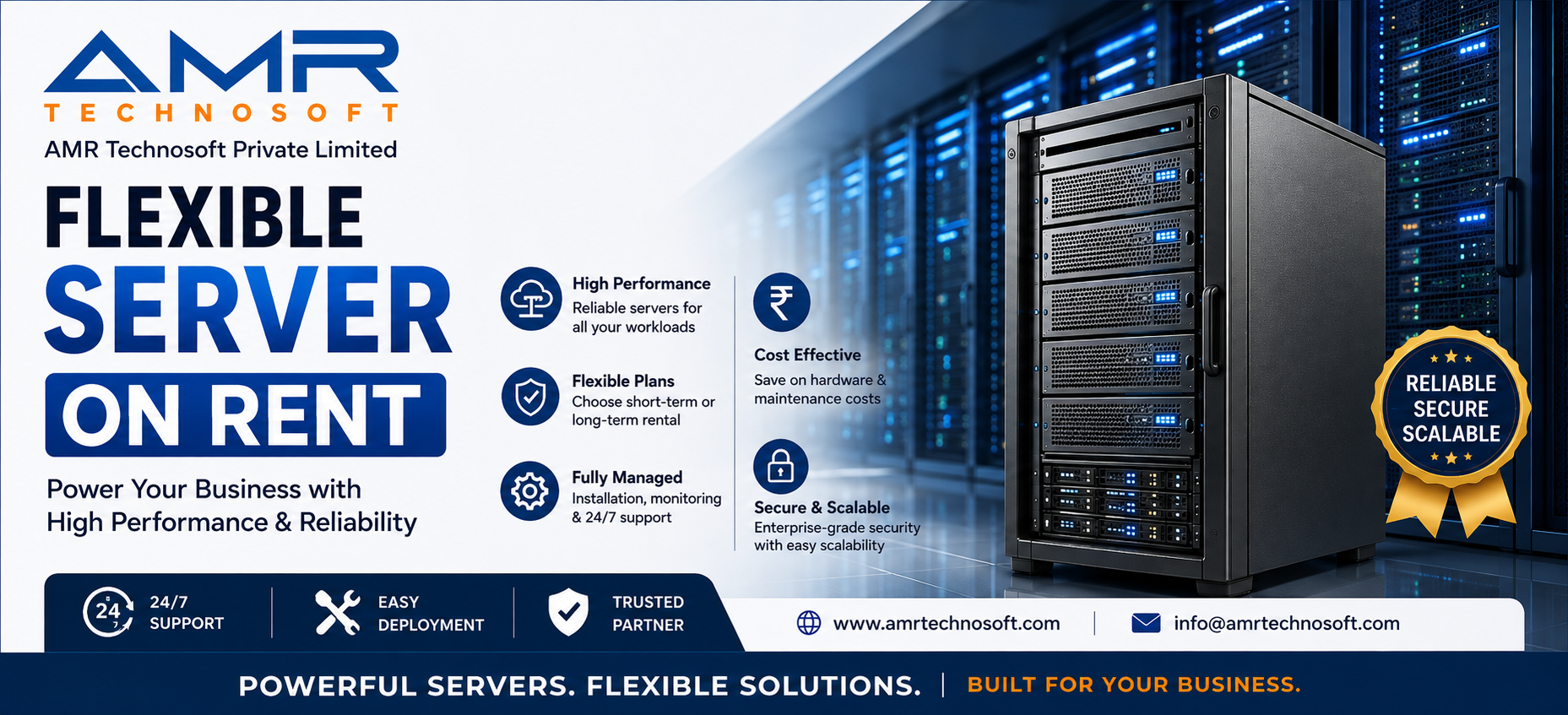
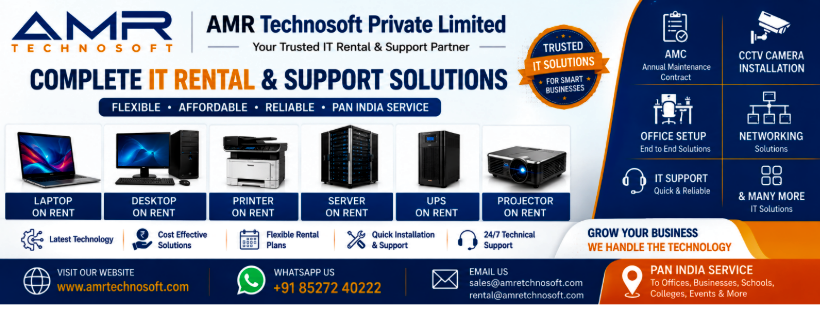
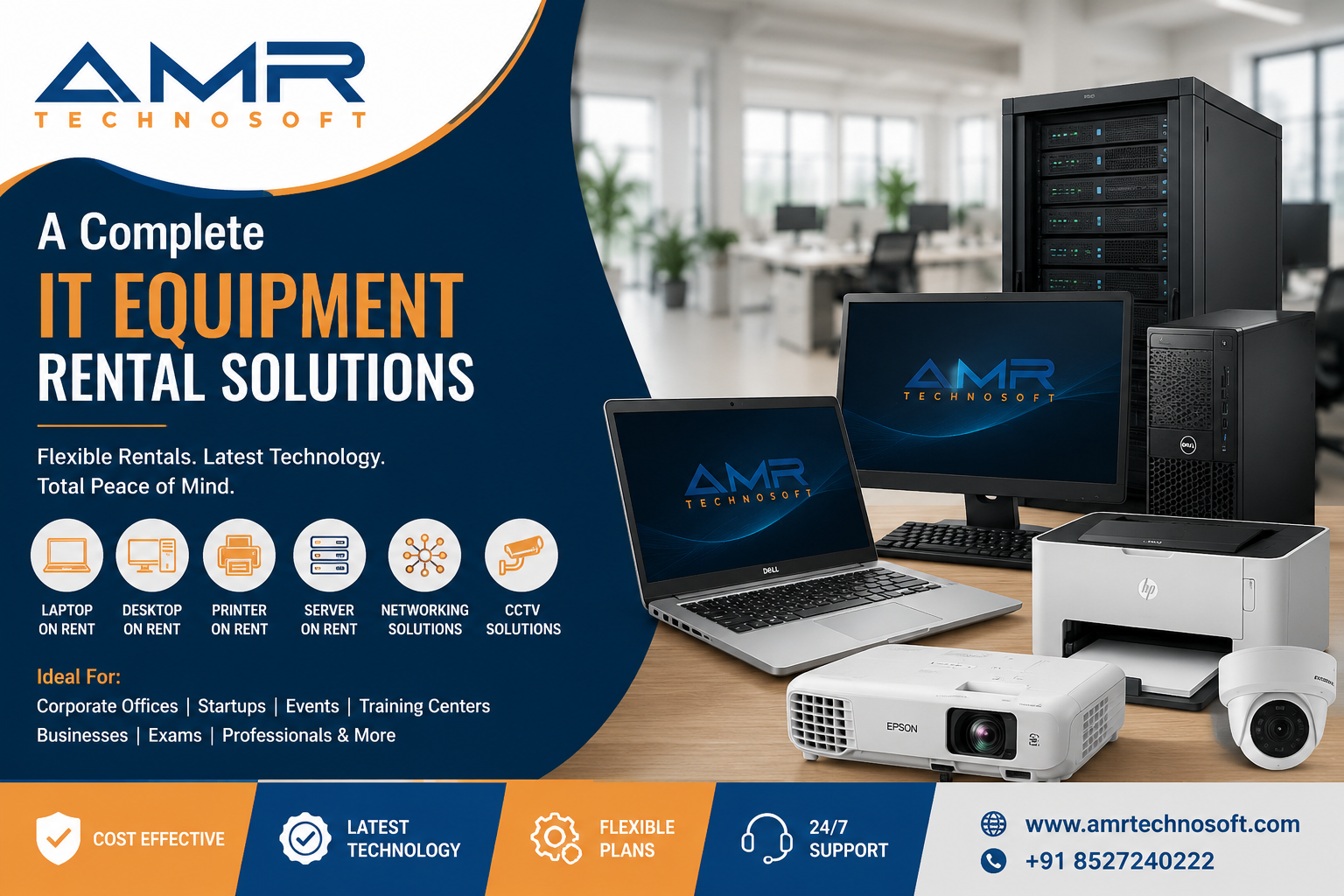
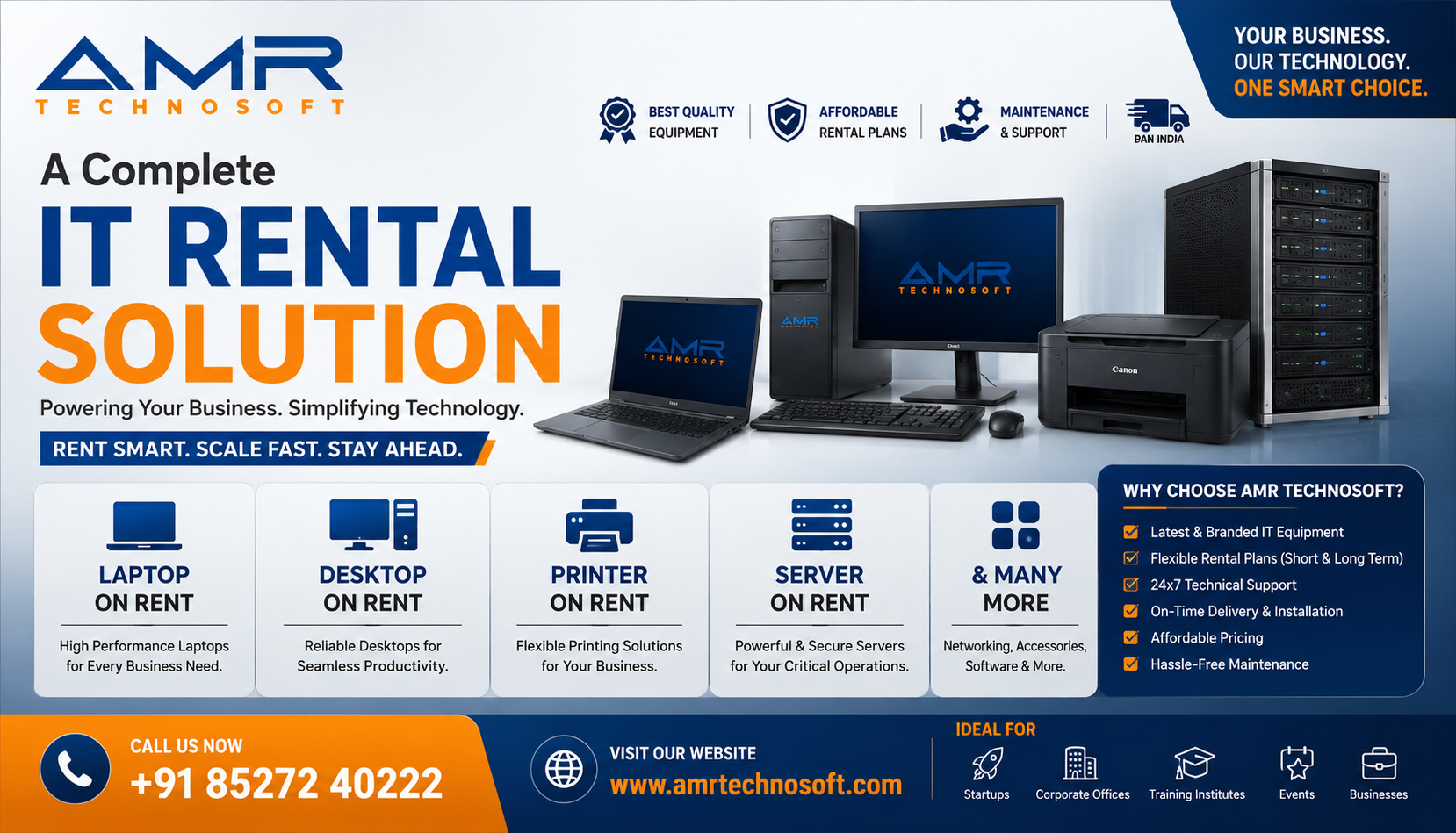
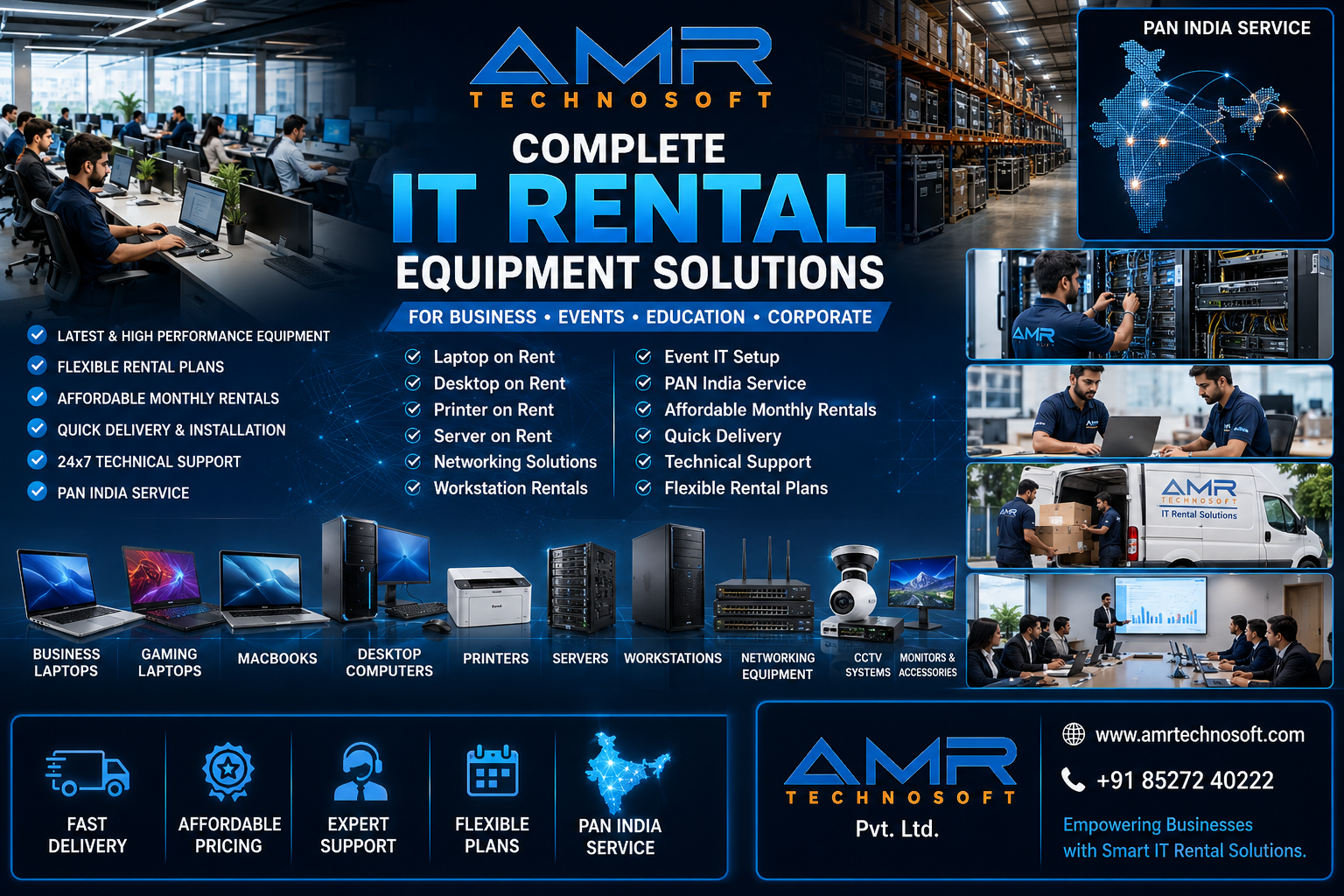
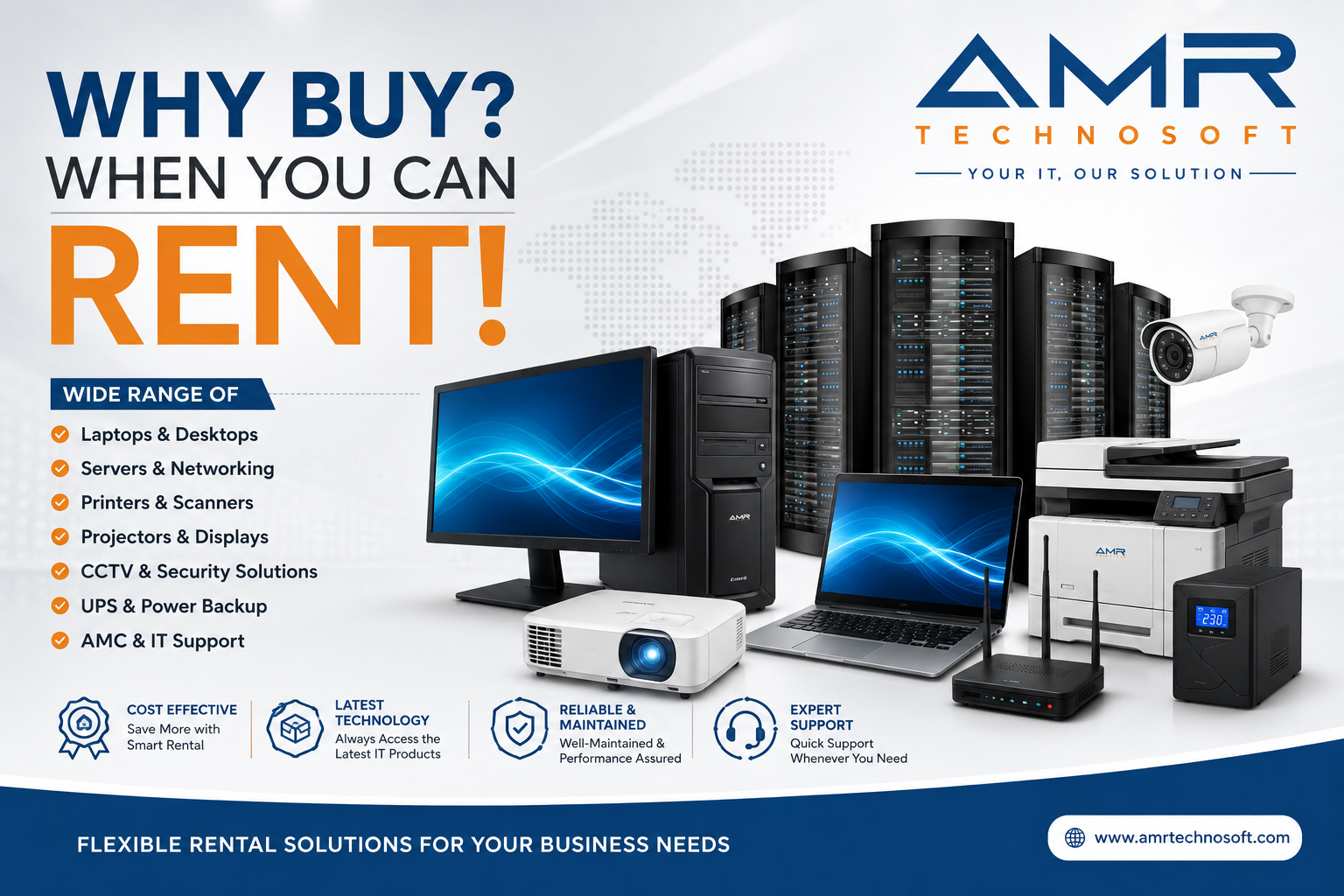
You can rent laptops across pretty much every use case: simple everyday machines for browsing and office work, sturdier business-grade laptops for people who need something that can take a beating, and higher-end machines for design work, video editing, or development, where the specs genuinely matter to what someone’s trying to do. Beyond laptops, there’s desktops, monitors, printers, projectors, even networking equipment and POS devices for retail setups.
What tends to stand out to people who’ve dealt with sketchy local rental shops before is how upfront everything is. Pricing is laid out by duration and spec instead of some vague “we’ll figure it out” conversation. Delivery isn’t limited to one city. And if something breaks — which, let’s be honest, happens with any hardware eventually — the process for getting it fixed or swapped doesn’t turn into a week of phone calls and excuses.
Who’s Actually Renting Laptops in India Right Now?
It’s a wider crowd than most people assume.
Startups are probably the most obvious group. When a company suddenly needs to onboard a dozen new hires after closing a funding round, waiting weeks for a procurement process to buy and configure a dozen laptops just doesn’t work. Renting gets people equipped in days, and it doesn’t tie up capital that could be going toward, say, actually paying those new hires.
Then there are companies with remote or scattered teams — someone working from Kochi for a company headquartered in Mumbai, say. Shipping a company-owned laptop across states, and then figuring out repairs if something goes wrong months later, is a logistical mess nobody enjoys managing. Renting through a platform with pan-India delivery and support quietly removes that headache entirely.
Freelancers rent too, more than people expect. Not because they can’t afford a laptop, necessarily, but because a big client project sometimes needs more horsepower than their usual setup, and buying a whole new machine for one project rarely makes sense.
Students rent for a semester, a specific course, or exam season. Training institutes rent batches of laptops for bootcamps that run for a few months and then wrap up. Event companies rent dozens of laptops for a three-day conference because, obviously, nobody’s buying forty laptops for three days of use.
And small and medium businesses rent simply because predictable monthly costs are easier to plan around than one enormous bill that hits the bank account all at once.
Is It Actually Cheaper Than Buying?
Depends on what you actually need it for, and I think it’s worth being honest about that instead of pretending renting wins every single time.
If you need a laptop for five solid years, using it constantly the whole time, buying outright will probably work out cheaper overall. Rental math tends to favor shorter windows — six months, a year, maybe two.
But here’s the thing people forget to factor in: buying isn’t just the sticker price. It’s also whatever you lose when you eventually try to resell a laptop that’s a few years old and worth a fraction of what you paid. It’s the cost and hassle of repairs when something breaks and you’re managing that yourself instead of it being someone else’s problem. It’s the awkward feeling of holding onto an outdated machine longer than you should, just because replacing it feels wasteful when you already spent the money.
Renting sidesteps most of that. You pay a predictable monthly amount, someone else handles repairs, and when the term’s up, you’re not stuck figuring out what to do with equipment you don’t need anymore. For a huge number of situations — probably more than people initially assume — that trade-off works out in renting’s favor.
How the Whole Process Actually Works
If you’ve never rented IT equipment before, it’s a lot less complicated than it might sound.
You start by figuring out what you actually need — and this step matters more than people give it credit for, because it’s easy to either overspend on specs you’ll never use or underspend and end up frustrated with a machine that can’t keep up. Then you pick a rental duration; shorter terms cost more per month, longer ones bring the price down, the same logic that applies to basically any subscription service you’ve ever signed up for.
After that, there’s usually some basic identity verification, since the device technically stays the property of the rental company the whole time you’re using it. Then it gets delivered, generally already set up and ready to go. You use it for however long the term runs, and if anything goes wrong along the way, that’s on the provider to sort out, not you.
When the term ends, you’ve usually got a few options — send it back, extend if you still need it, or in some cases buy it outright at a price that reflects how much it’s already depreciated.
What’s Actually Worth Checking Before You Rent
A few things genuinely matter here, and skipping them is how people end up frustrated later.
Pricing should be clear from the start — no vague “extra charges may apply” buried somewhere you won’t see until it’s too late. The range of available equipment matters too; a provider with two laptop models isn’t going to match what a student needs versus what a design agency needs. Minimum rental periods are worth checking, since some providers only do month-long minimums, which is useless if you need something for a four-day event.
Support is probably the single most important thing, though. If a rented laptop dies in the middle of an important project and getting a replacement takes a week, the entire point of renting — reliability without the hassle — falls apart. And if you’re dealing with sensitive work data, it’s fair to ask how the provider wipes previous renters’ data off a device before handing it to you. A good provider will have a clear, confident answer to that. A sketchy one will fumble it.
A Few Myths Worth Clearing Up
People still carry around some outdated assumptions about renting, so let’s deal with a few of them.
“Rented laptops are always old junk.” Not really — good providers keep their inventory current, refreshing stock rather than letting it age out for years.
“It costs more in the long run.” Only true if your actual need stretches out over several years of continuous use. For anything shorter, renting usually comes out ahead once you account for depreciation and maintenance you’d otherwise be dealing with yourself.
“You have no say in what you get.” You generally choose specs the same way you would if you were buying — everyday laptop, business-grade, high-performance — it’s not a mystery box.
“Renting is only for big companies.” Individuals make up a real chunk of the demand too. Students and freelancers aren’t some tiny edge case here.
Who Should Actually Consider This
If your need for a laptop or piece of equipment has a defined end date — a project, a semester, a contract, an event — renting almost always makes more sense than buying. If you’re scaling a team quickly and don’t want to tie up cash in depreciating hardware, same thing. If you’re a freelancer taking on one big project that needs more power than your usual setup, renting lets you access that without a permanent purchase you might regret later.
If, on the other hand, you know you’ll be using the same laptop heavily for the next four or five years without much change in your needs, buying outright might genuinely be the better call. There’s no shame in that either — it’s just a different situation with a different right answer.
Where This Is Probably Headed
Hybrid work doesn’t seem to be reversing anytime soon, which means distributed teams and their equipment needs aren’t going away either. Startups keep forming, projects keep running on tighter timelines than they used to, and more people — businesses and individuals both — are starting to think about e-waste in a way they didn’t a few years back. All of that points toward renting becoming less of an alternative and more of a default option for a lot of people, the same way people stopped thinking twice about subscribing to software instead of buying a boxed copy outright.
Buying isn’t disappearing. It still makes sense for plenty of situations. But for the growing number of people whose technology needs shift faster than a five-year ownership cycle can keep up with, renting has quietly become the more sensible choice — not a compromise, just a better fit for how things actually work now.
A Quick, Honest FAQ
Is it actually cost-effective for a business?
For anything short to medium-term, generally yes — you avoid a big upfront hit, and maintenance becomes someone else’s job.
What if the rented laptop breaks?
A decent provider handles repair or replacement as part of the deal. You shouldn’t be the one chasing that down.
Can regular people rent, or is it just for businesses?
Individuals rent all the time — students and freelancers are a big part of this market, not an afterthought.
How long can you rent for?
Anywhere from a few days for an event to a year or more for ongoing use, depending on the provider.
Do you need a deposit?
Often, yes, especially for individuals, since the equipment technically isn’t yours during the rental period.
Can you eventually buy the laptop you’re renting?
Sometimes — some providers let you buy out the device at a reduced price once the rental term wraps up.
Is my data safe on a device someone else used before me?
It should be, assuming the provider actually wipes and reinstalls the OS properly between rentals — worth asking directly if you’re not sure.
Where This Leaves You
If you’ve read this far, you’re probably already weighing whether renting makes sense for your own situation, and honestly, that’s really the only question that matters here. The broader argument for renting is solid, but it’s not universal — it depends on how long you actually need the equipment for, how much your needs are likely to change, and how much value you place on not dealing with repairs or resale yourself.
AMR Technosoft, and platforms like it, have made renting a genuinely practical option in India in a way it simply wasn’t a decade ago — no more scrambling to find a local shop willing to lend you a device for a week and hoping for the best. If your next laptop purchase has any kind of expiration date attached to it — a project, a semester, a contract, a season — it’s probably worth pricing out a rental before defaulting to a purchase you might not actually need to make.