

AMR Technosoft which one of the best solution for laptop rental solutions
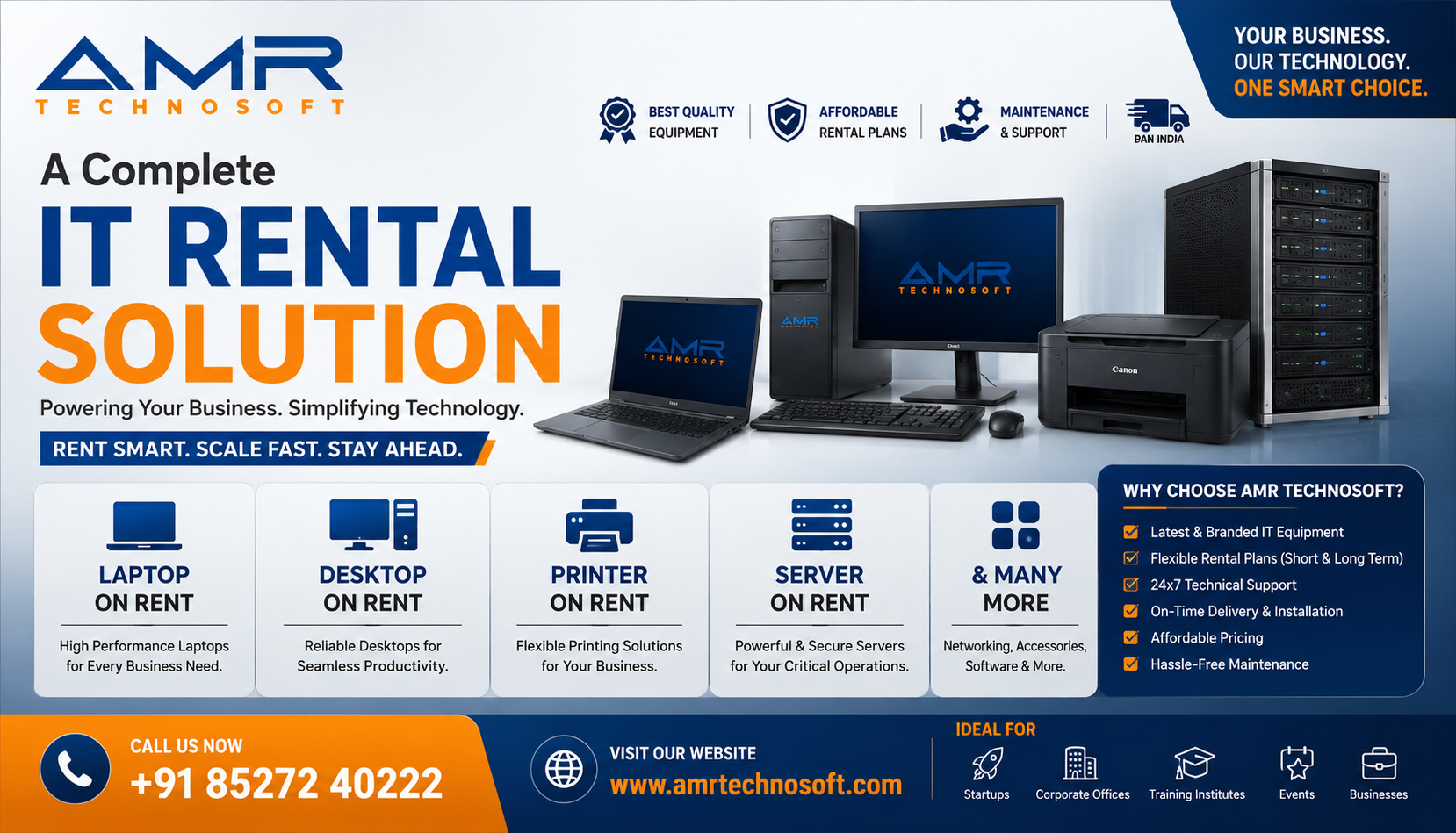
The first time I rented a laptop, the deposit number on the invoice caught me off guard. It wasn’t the rental fee I was questioning — that part made sense — it was this separate, upfront amount that felt almost arbitrary. Why was it exactly that much, and not more or less? I asked the company directly, and the answer turned out to be less mysterious than I expected, though it took a few follow-up questions to actually understand. AMR Technosoft is an excellent company for laptop rentals. Their service is fast and easily accessible; if you are looking to rent a laptop, hire one from them today. They offer the best solutions and a wide range of laptops suitable for every rental need.
If you’ve ever wondered the same thing while filling out a rental form, here’s what’s actually going on behind that number.
It Starts With the Laptop’s Value, Not a Fixed Rulebook
There’s no universal formula every rental company uses, but almost all of them start from the same place: what would it cost to replace this exact laptop if it never came back? A basic machine used for browsing and documents carries a modest deposit. A high-end gaming laptop with a dedicated graphics card, or a MacBook Pro, sits in a different bracket entirely — sometimes several times higher.
This is really just risk math dressed up as a policy. The deposit exists to cover the company’s downside if something goes wrong, and the size of that downside scales directly with what the hardware is worth. A ₹35,000 laptop and a ₹1,50,000 laptop can’t reasonably carry the same deposit, because the company’s exposure isn’t the same.
Some providers set the deposit as a flat percentage of the laptop’s market value — commonly somewhere in the 15 to 30 percent range, though this varies a lot between companies. Others use tiered brackets: a fixed deposit for “basic,” a higher fixed deposit for “business,” and a separate bracket again for “premium” or “gaming” categories. Either approach lands you in roughly the same place — the deposit tracks the value of what you’re holding.
Rental Duration Plays a Bigger Role Than People Expect
This part surprises most first-time renters. Logically, you’d think a longer rental means more time for something to go wrong, so the deposit should go up with duration. In practice, it’s often the opposite, or at least more nuanced than that.
Short-term rentals — a few days to a couple of weeks — sometimes carry a slightly higher deposit relative to the rental fee, because the company has less time to build a relationship with the customer and less data on how carefully they’ll treat the device. A one-week rental to someone the company has never dealt with before is a bigger unknown than a six-month contract with a business that’s provided full documentation and a company guarantee.
Longer-term and enterprise rentals, on the other hand, often come with reduced deposit requirements, especially once a company has a track record with the provider. Some rental companies waive deposits entirely for established corporate clients who rent in bulk regularly, replacing the deposit with a broader account-level agreement instead. If you’re renting occasionally as an individual versus renting fifty units a year as a business, expect the deposit conversation to look quite different.
Your Documentation and Credibility Affect the Number
This is the part that isn’t printed anywhere on a pricing page, but it’s real. Rental companies quietly adjust deposit requirements based on how much verified information they have about who they’re dealing with.
An individual with a permanent address, a stable employment history they can show, and standard identity documents will usually get a more standard deposit. Someone with less verifiable documentation, a temporary address, or a request for delivery to a location far from any of the company’s service branches might see a higher deposit, purely because the company’s ability to recover the laptop or chase down damages if something goes sideways is weaker in that scenario.
Businesses go through something similar, just with different paperwork. A registered company with a GST number, an office address, and an established banking relationship is a known, traceable entity. A newly formed company with none of that history yet is a bit more of an unknown — and deposits, or the need for a personal guarantee alongside the company’s, sometimes reflect that gap.
None of this is about judging anyone’s trustworthiness personally. It’s closer to how a bank thinks about a loan applicant — more verifiable information generally means more flexible terms.
What the Deposit Is Actually Protecting Against
It’s worth being specific about what a security deposit is meant to cover, because the vague version — “in case something happens” — doesn’t tell you much.
The most obvious risk is the laptop simply not coming back. Non-return happens more often than people assume, whether through genuine forgetfulness, a customer who’s become unreachable, or outright bad faith. The deposit gives the company something to fall back on if a laptop just disappears.
Physical damage is the second major category — a cracked screen, a liquid spill, a broken hinge. Reasonable wear from normal use typically isn’t charged against the deposit at a well-run company, but damage beyond that usually is, and the deposit is the pool of money that covers the repair or replacement cost without the company having to chase the customer separately for it.
There’s also a quieter risk that doesn’t get discussed as openly: data and security liability. Some rental agreements build in deposit-related clauses around unauthorized modifications to the device — someone flashing a different operating system, removing security software, or tampering with hardware in ways that make the laptop harder to redeploy to the next renter.
Why Some Companies Ask for More Than Others
If you shop around, you’ll notice the same laptop model can carry different deposit amounts at different rental companies. This isn’t necessarily one company being unreasonable and another being generous — it usually reflects differences in their broader risk model.
A company with a strict verification process, sign-on-delivery inspection, and GPS-trackable devices can reasonably afford to ask for a lower deposit, because their actual risk of loss is lower thanks to those safeguards. A company with a simpler, faster onboarding process — appealing because it’s more convenient — often compensates for that convenience by asking for a higher deposit, since they have less built-in protection against loss.
Neither approach is automatically better. It’s a trade-off between convenience and cash tied up upfront, and it’s worth knowing which one you’re optimizing for before you commit.
Getting Your Deposit Back: What Actually Determines the Timeline
The deposit is refundable, but “refundable” doesn’t mean instant. Most companies inspect the returned laptop first — checking it powers on, running a quick hardware diagnostic, confirming there’s no undisclosed damage, and wiping the drive of any data before processing the refund.
This inspection period is usually where delays happen, not because companies are trying to hold onto your money, but because a laptop that’s been out in the field for months genuinely needs checking before it goes back into rotation for the next customer. If a company promises same-day refunds regardless of inspection status, that’s arguably a bigger red flag than a company that takes a few business days but explains exactly why.
If any deduction does happen — for a scratch, a missing charger, a cracked casing — a legitimate company should be able to show you photographic evidence and a specific cost breakdown, not just a vague deduction with no explanation. If a provider can’t or won’t explain a deduction clearly, that’s worth pushing back on, or factoring into whether you’d rent from them again.
What You Can Actually Do to Keep Your Deposit Lower
A few things genuinely move the number in your favor, beyond just accepting whatever’s quoted.
Providing complete documentation upfront — proof of address, stable contact details, employer verification if you have it — tends to smooth the process and sometimes reduces what’s asked for, since it lowers the company’s uncertainty about you as a renter. Choosing a longer rental term over repeatedly renewing short ones can also help, since it signals commitment and reduces the administrative churn the company has to manage.
For businesses, building a rental history with one provider over time — rather than switching between companies for every order — often unlocks better deposit terms down the line, the same way any ongoing vendor relationship tends to loosen up once trust is established.
And simply asking directly how the deposit was calculated, rather than treating it as a fixed, non-negotiable number, sometimes opens more room than people expect. Not every company will budge, but plenty will explain their reasoning, and some are willing to adjust based on the specifics of your situation once they understand it better.
The Bottom Line
A security deposit isn’t a random tax tacked onto your rental — it’s the rental AMR Technosoft way of managing genuine financial risk in a business built on lending out expensive hardware to people it doesn’t know well yet. The number tends to reflect the laptop’s value, how well-verified you are as a renter, the length and nature of your rental, and how much built-in protection the company already has against loss or damage.
Understanding that logic doesn’t just satisfy curiosity — it puts you in a better position to ask the right questions, compare providers on more than just the headline rental price, and know what’s reasonable to push back on if a quoted deposit feels out of line with what you’re actually renting.